
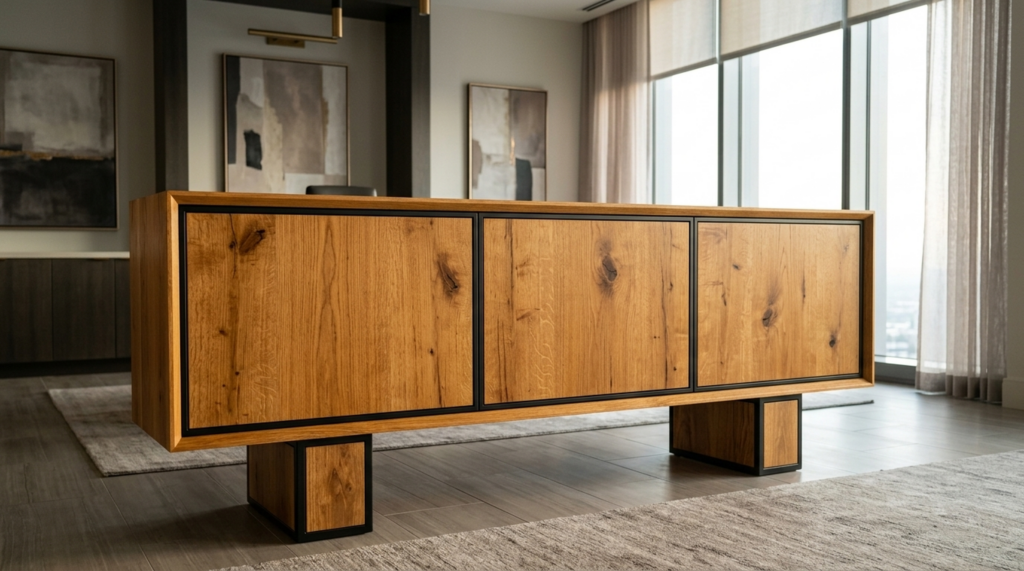
A credenza, a sideboard, and a buffet are close cousins: all three are low storage cabinets that sit against a wall. The difference is mostly about where the piece is used and how it stands. A credenza is the office piece, low and usually on a plinth or short base, used behind a desk or along a conference room wall. A sideboard is the dining-room version, often a touch taller and used to store and serve. A buffet is a taller sideboard raised on legs, built for serving food at standing height. For an office, the piece you want is a credenza.
| Piece | Where it lives | Height | Base | Built for |
|---|---|---|---|---|
| Credenza | Office, conference room | Low (~28–30″) | Plinth or short legs | Storage + a working surface behind a desk |
| Sideboard | Dining room | Low to medium | Short legs or plinth | Storing dishes, linens; a serving surface |
| Buffet | Dining room | Taller | Longer legs | Serving food at standing height |
In practice the names overlap, and retailers use them loosely. The distinctions below are the ones that actually matter when you are choosing a piece.
What is a credenza?
A credenza is a long, low cabinet made for an office. It sits behind or beside a desk, or along a conference room wall, and it does two jobs at once: closed storage for files and supplies, and a flat surface for a printer, a lamp, or things you set down during a meeting. Because it is built low, it keeps sightlines open across a room. Credenzas usually rest on a plinth or a low steel base rather than tall legs, which gives them a grounded, architectural look that reads as office furniture rather than dining furniture.
What is a sideboard?
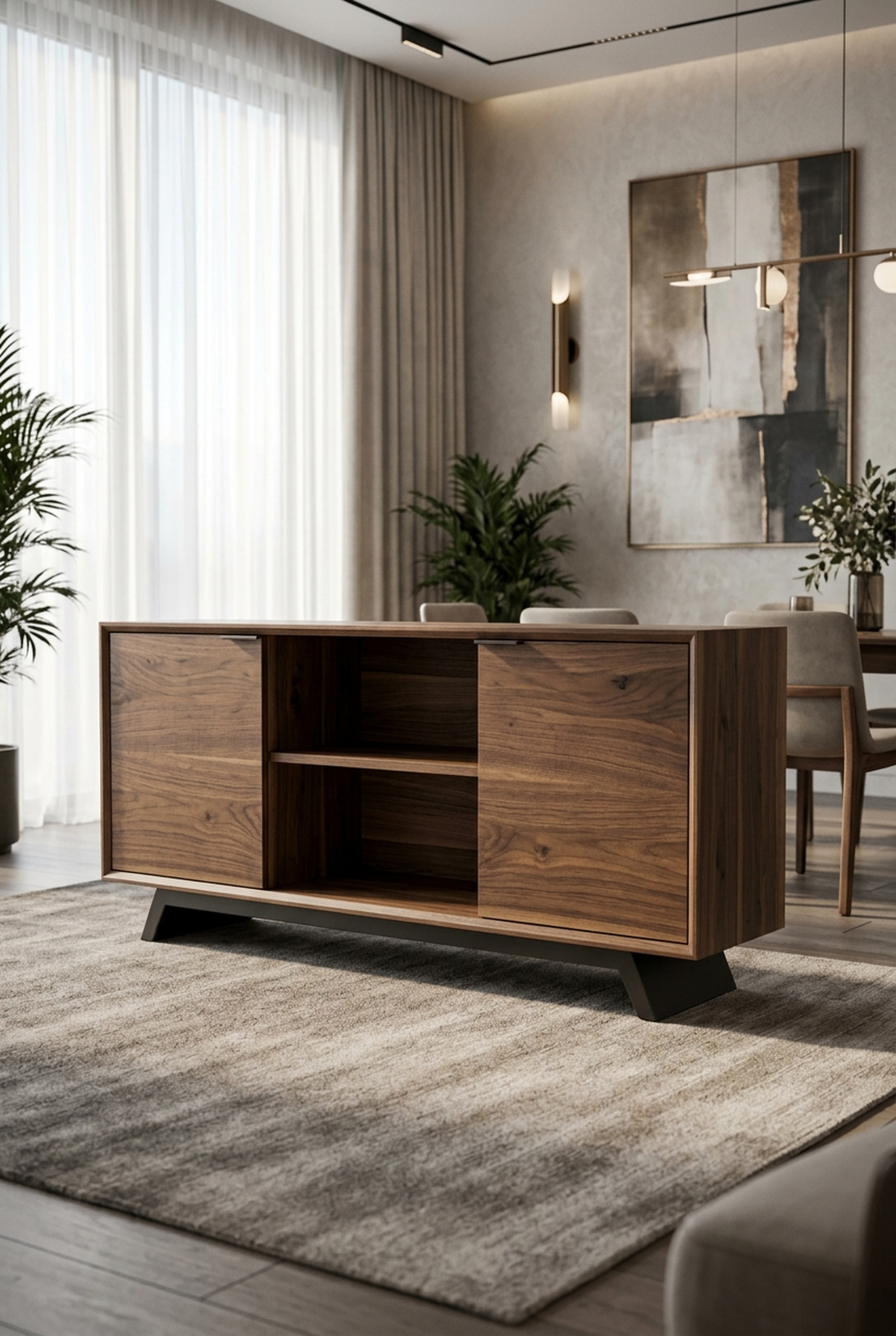
A sideboard is the dining-room relative of the credenza. The form is nearly identical, a low cabinet with doors and drawers, but it is used to store dishes, flatware, and linens and to give you a surface to set serving dishes on. The line between a sideboard and a credenza is thin enough that the same piece is often sold under both names; the word changes with the room more than the build.
What is a buffet?
A buffet is a sideboard raised up on longer legs. The taller stance puts the top at a comfortable height for serving food while standing, which is where the name comes from. Buffets are a dining and entertaining piece; you rarely see one in an office, where the lower, grounded credenza is the right call.
Which one belongs in an office?
The credenza. Its low profile keeps a room open, its closed storage hides the clutter an office accumulates, and its top gives you a staging surface without taking up floor space the way a second desk would. Set one behind an executive desk, run one along a conference room wall under the art, or place one behind a reception desk for back-of-house storage.
The office rule
If it goes in an office, call it a credenza and keep it low. Save “buffet” for the dining room — those tall legs are built for serving food, not for working behind.
Built to last: what a good credenza is made of
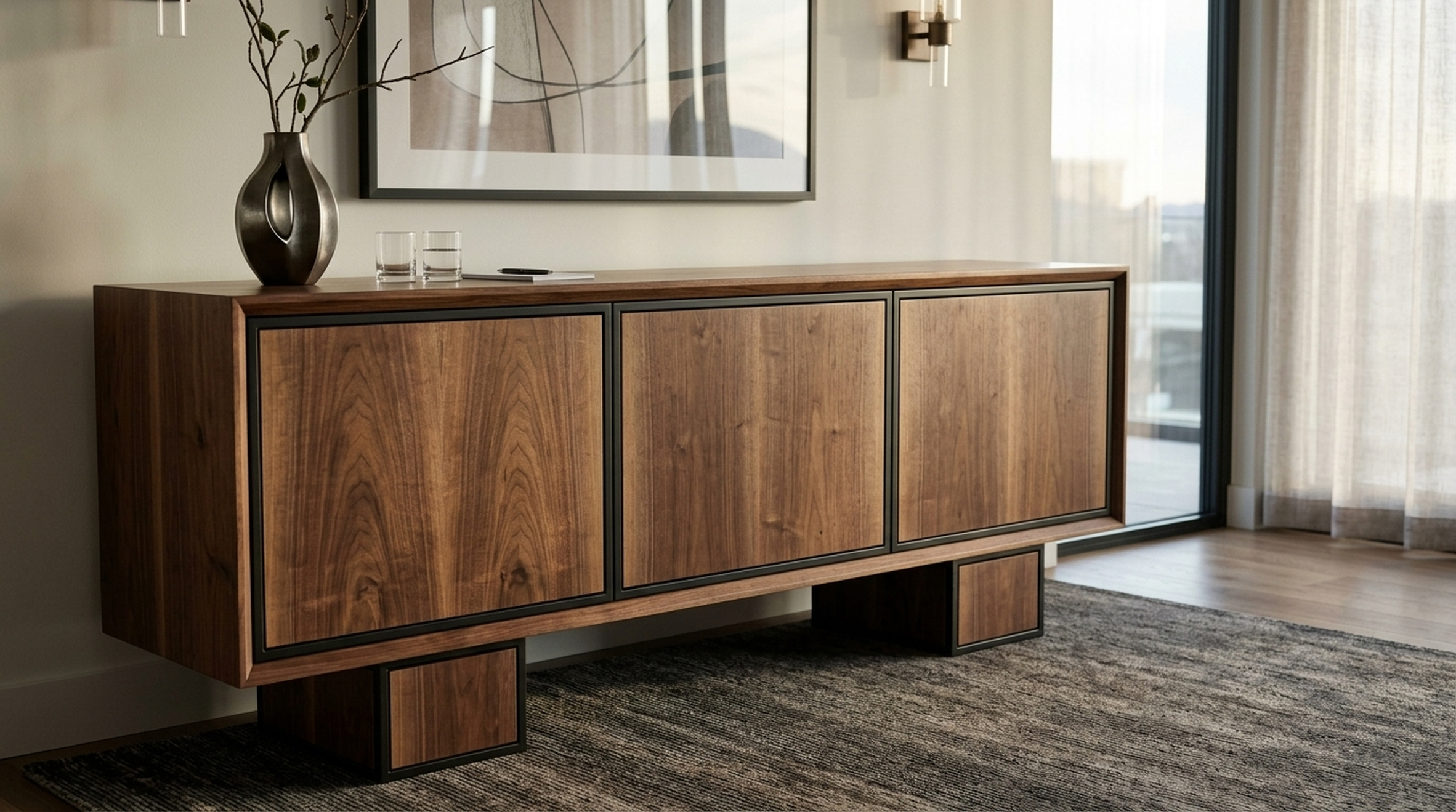
Most office credenzas are veneer or laminate over particleboard, and they wear the way that always does: chipped edges, a swollen top where a drink sat, doors that stop closing square. A solid hardwood credenza behaves differently. It takes daily contact, the top can be refinished years on, and it holds its line. Fargo Woodworks builds credenzas and sideboards by hand in Fargo, North Dakota from solid American hardwood in walnut, white oak, red oak, and maple, several paired with hand-welded steel. For the full rundown on sizing, configuration, and cost, see the office sideboards & credenzas buyer’s guide, part of our custom office furniture guide.
Fargo Woodworks office credenzas
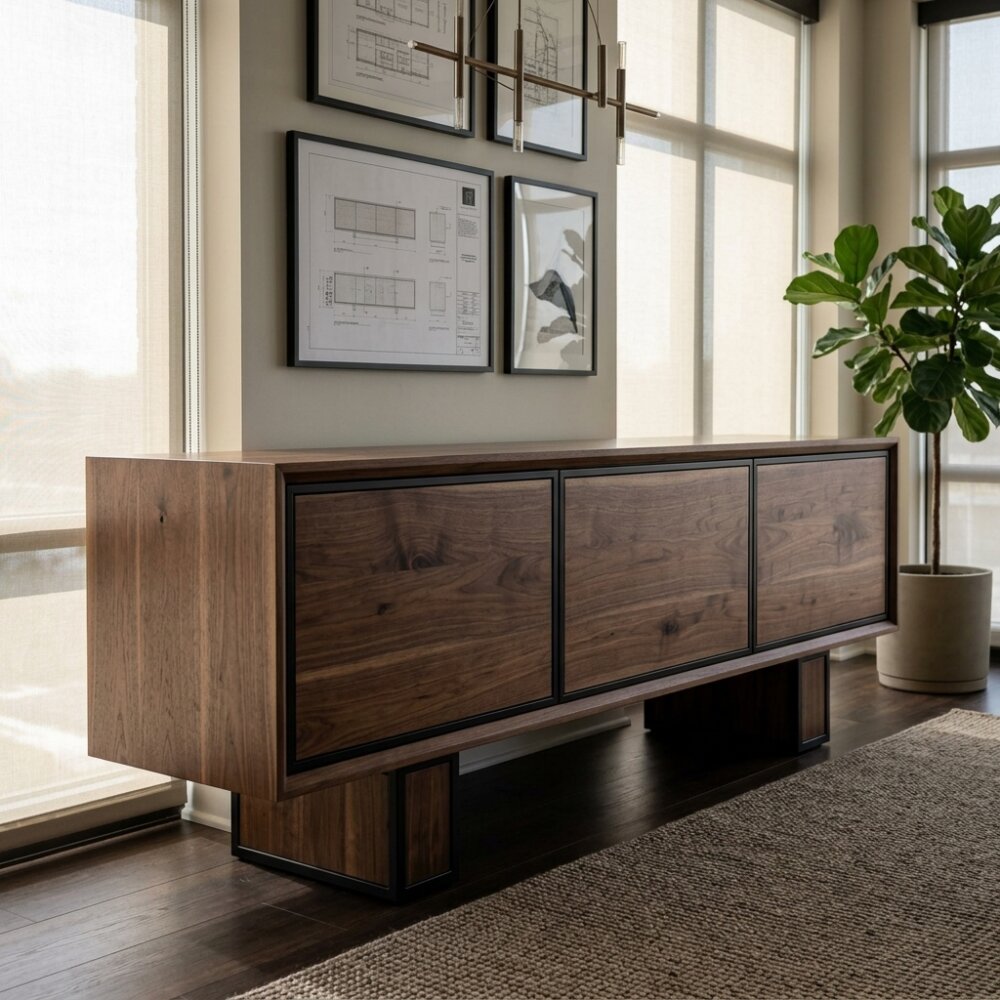
Every Fargo Woodworks credenza is handcrafted to order in Fargo, North Dakota from solid American hardwood, and ships nationwide. A selection is below.
-
The Hartford Sideboard
From: $4,500.00 -
The Timberline Sideboard
From: $2,500.00 -
The Cassian Sideboard
From: $3,000.00 -
The Cascade Sideboard
From: $2,500.00


View all credenzas & sideboards →
Frequently asked questions
What is the difference between a credenza and a sideboard?
Very little in build — both are low cabinets with doors and drawers. The difference is the room: a credenza is used in an office (behind a desk or in a conference room), while a sideboard is the dining-room version used for storing dishes and serving. The same piece is often sold under both names.
What is the difference between a sideboard and a buffet?
Height and legs. A buffet is a sideboard raised on longer legs so the top sits at a comfortable height for serving food while standing. A sideboard is lower. Buffets are a dining/entertaining piece; sideboards and credenzas are lower and more versatile.
What is a credenza used for in an office?
Closed storage for files and supplies, plus a flat surface for a printer, lamp, or things set down during a meeting. Its low profile keeps a room open. It is commonly placed behind an executive desk, along a conference room wall, or behind a reception desk.
Are credenzas a good choice for an office?
Yes. A credenza adds storage and a working surface without the floor space of a second desk, and its low, grounded form reads as office furniture. A solid hardwood credenza also holds up to daily use and can be refinished rather than replaced.
Can a credenza be used in a dining room?
Yes. Because the form is so close to a sideboard, a credenza works in a dining room for storage and serving. The names are largely interchangeable; choose the proportions and height that suit the room.
Does Fargo Woodworks make custom credenzas?
Yes. Fargo Woodworks builds credenzas and sideboards to order in Fargo, North Dakota from solid American hardwood — walnut, white oak, red oak, and maple — sized and finished to match the rest of an office. Nationwide shipping; white-glove delivery available on request.
Built to last. Designed with intent. — Fargo Woodworks, Fargo, North Dakota.
Trusted by Industry Leaders