
Black walnut measures 1,010 lbf on the Janka hardness scale and is the only commercially significant dark hardwood native to North America. That second fact is why it costs what it does.
This page is what the wood actually is, why it is priced the way it is, and how it behaves in furniture built to last decades. If you already know you want it, the conference tables and commercial pieces are here.
What black walnut wood actually is

Juglans nigra, eastern black walnut, grows across the eastern and central United States. Nearly every other dark furniture wood you have seen is either an imported tropical species or a pale wood stained to look dark. Walnut is dark all the way through.
| Property | Black walnut | For comparison |
|---|---|---|
| Janka hardness | 1,010 lbf | White oak 1,360 · hard maple 1,450 |
| Color | Chocolate to purple-brown heartwood | Oak is tan, maple near white |
| Grain | Straight, occasionally wavy or curly | Oak is open and ringed |
| Workability | Excellent, machines and finishes cleanly | Maple burns, oak dulls tooling |
| Stability once dried | Very good | Comparable to white oak |
Why black walnut costs what it does

Four things drive the price, and none of them are going to change:
- Slow growth. A walnut tree takes decades to reach a size worth milling for furniture grade lumber.
- Small trees. Walnut does not grow to the diameters oak does, so wide boards are scarce and a book-matched top from a single log is scarcer still.
- High waste. Only the heartwood is the color people buy. The pale sapwood around the outside gets cut away, and that is a large share of every board.
- Demand does not move. It has been the premium American furniture wood for two centuries.
Steamed walnut is worth understanding. Much commercial walnut is steamed to drive color from the heartwood into the sapwood so more of the board is usable. It evens the tone and costs less. It also flattens the purple undertones that make walnut worth buying. We use unsteamed stock where we can.
Some numbers worth knowing before you specify it. Furniture-grade walnut is milled at 4/4 to 8/4, which is 1 to 2 inches rough. A finished conference top lands at 1.5 inches once it is planed and sanded. Boards wider than 12 inches are uncommon and priced accordingly, and a single-slab book-matched top over 10 feet usually means one log was set aside for it. Kiln-dried stock comes in at 6 to 8 percent moisture, which is what keeps a long top flat through years of building heating and air conditioning.
How black walnut behaves in furniture

- It lightens with age. Walnut is the rare wood that gets paler, mellowing from deep chocolate toward a warmer brown over years of daylight.
- It dents before oak does. At 1,010 lbf it is a medium-hard wood. In a school or a busy clinic we would recommend white oak.
- It repairs. Solid stock means a gouge fills and blends, and a top sands back and re-oils many times over.
- It hates a heavy film finish. Walnut looks best under hardwax oil, which sits in the wood. A thick lacquer makes it read like plastic.
- No two boards match. Color varies board to board and log to log, which is why we book-match tops from a single slab where the piece allows.
Black walnut against the other species we build in
| Black walnut | White oak | Hard maple | |
|---|---|---|---|
| Janka | 1,010 lbf | 1,360 lbf | 1,450 lbf |
| Color | Dark chocolate | Honey to pale tan | Near white |
| Reads as | Established, warm, formal | Current, light, open | Clean, bright, clinical |
| Best for | Boardrooms, law, wealth management | High traffic, general commercial | Medical, education, labs |
| Relative cost | Highest | Middle | Lowest of the three |
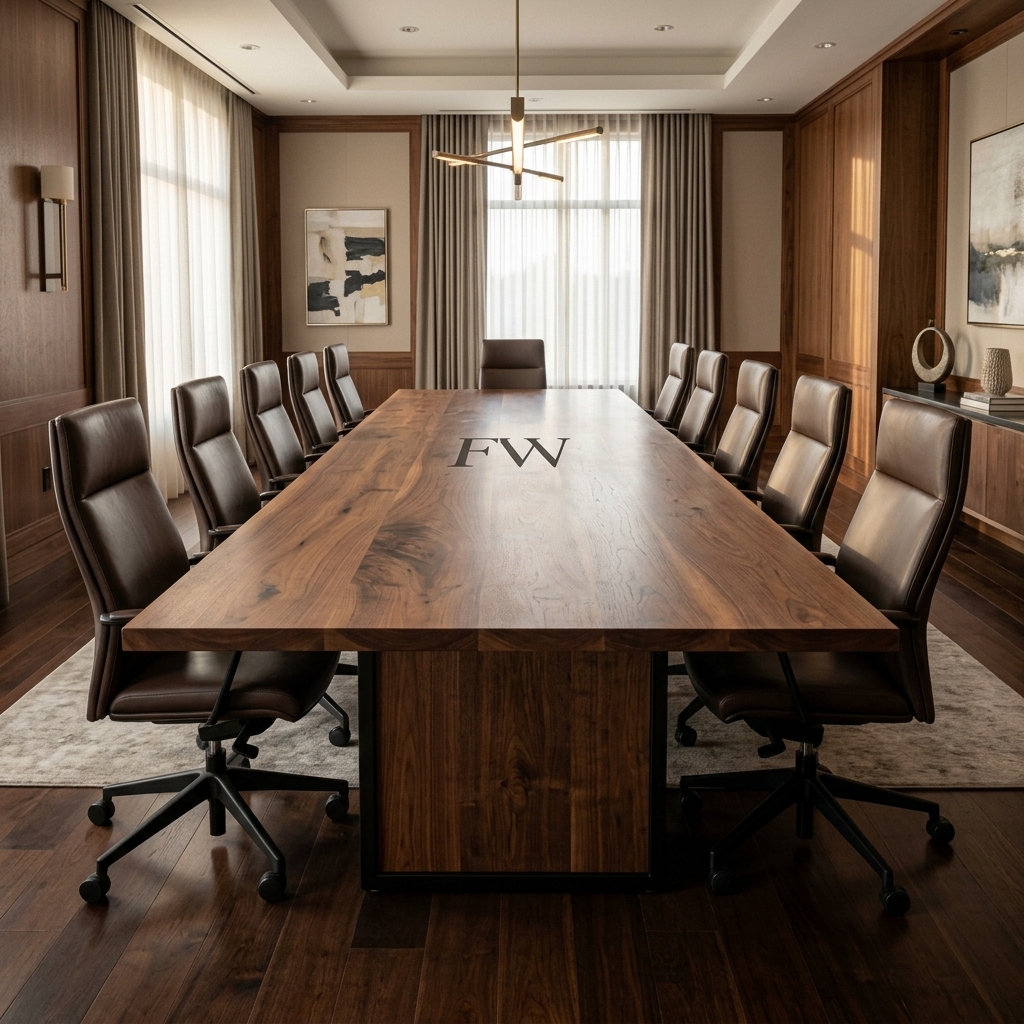
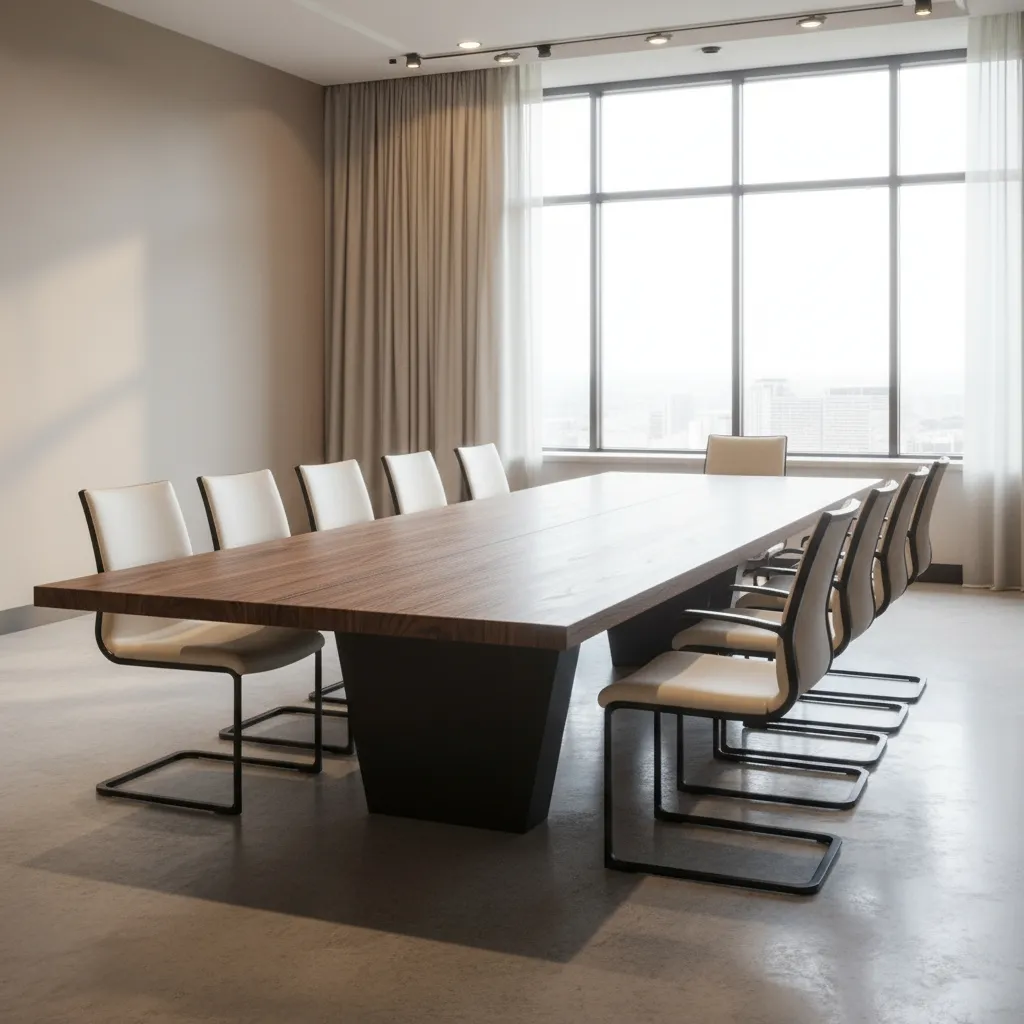
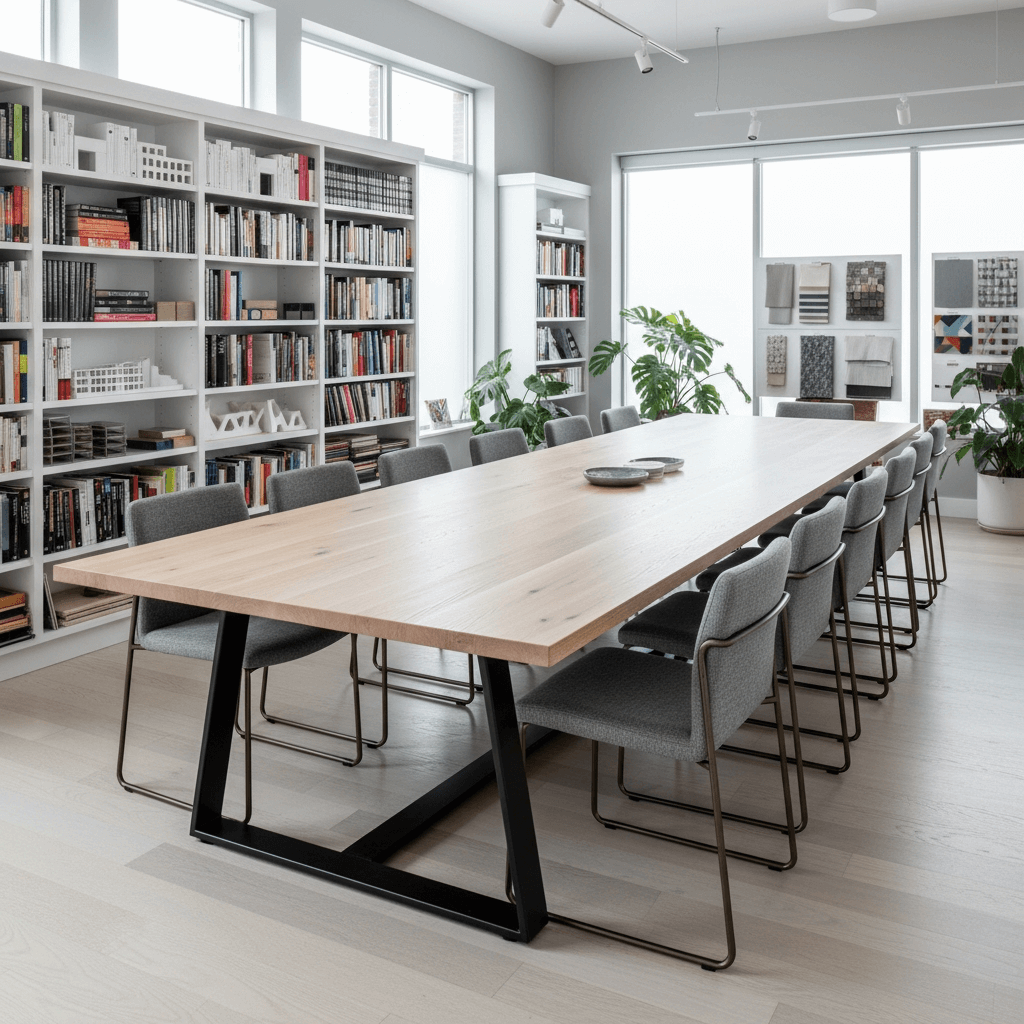
Black walnut pieces we build
Every piece is built to your dimensions in the species and finish you choose. Walnut is available across the range, not only on the tables shown here.



Is black walnut worth it?
For a piece that stays in one room for twenty years and gets seen by every client who walks in, yes. For a training room that takes daily abuse from a hundred people, white oak is the better buy and we will tell you so. The wood should match the room, not the budget line.
Frequently asked questions
How hard is black walnut wood?
Black walnut measures 1,010 lbf on the Janka hardness scale. That is medium-hard: softer than white oak at 1,360 and hard maple at 1,450, but harder than cherry or pine. It dents more readily than oak in very high traffic settings.
Why is black walnut so expensive?
Slow growth, smaller trees than oak so wide boards are scarce, high waste because only the dark heartwood is used, and two centuries of steady demand as the premium American furniture wood.
Does black walnut get darker or lighter over time?
Lighter. Walnut is unusual among furniture woods in that it mellows from deep chocolate toward a warmer, paler brown with exposure to daylight. Most woods darken.
What is the difference between steamed and unsteamed black walnut?
Steaming drives color from the heartwood into the pale sapwood so more of each board is usable, which evens the tone and lowers cost. It also flattens the purple undertones. Unsteamed walnut has more color variation and more depth.
Is black walnut good for a conference table?
Yes, for a boardroom or a law office where the room should read established. For a high-traffic training room, white oak is harder and the better choice.
Trusted by Industry Leaders