
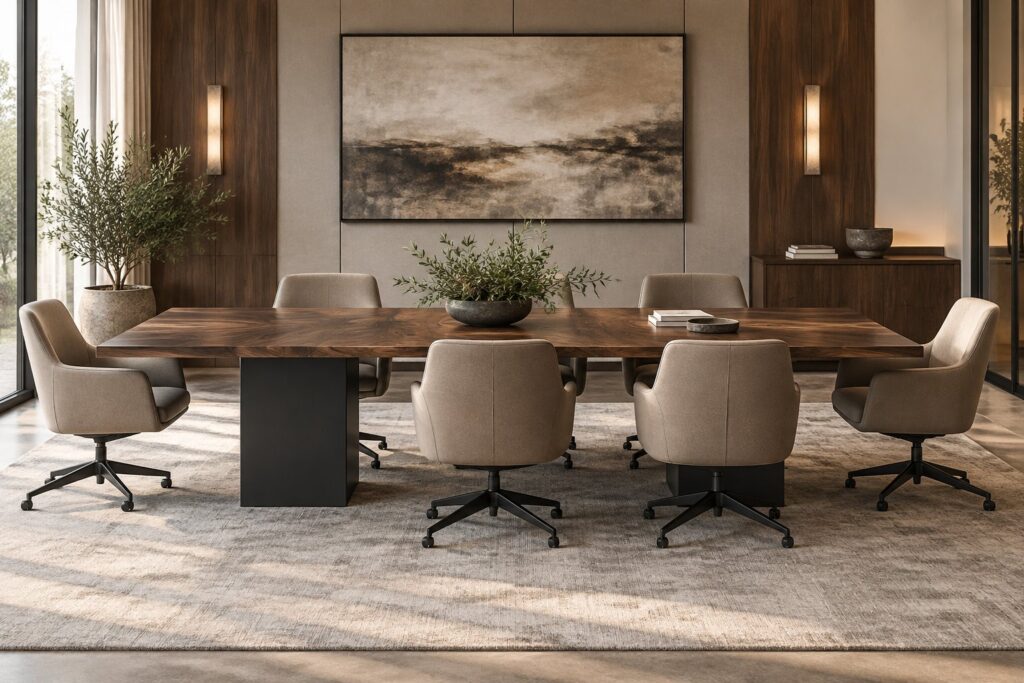
A high end conference table is a solid hardwood table, built to the room, with a top thick enough to feel substantial and a base that stays out of everyone’s knees. Price alone will not tell you whether you are getting one. This page covers what separates a high end table from one that only looks expensive in a photo, a side by side comparison, and the cases where a table from us is not the right call.
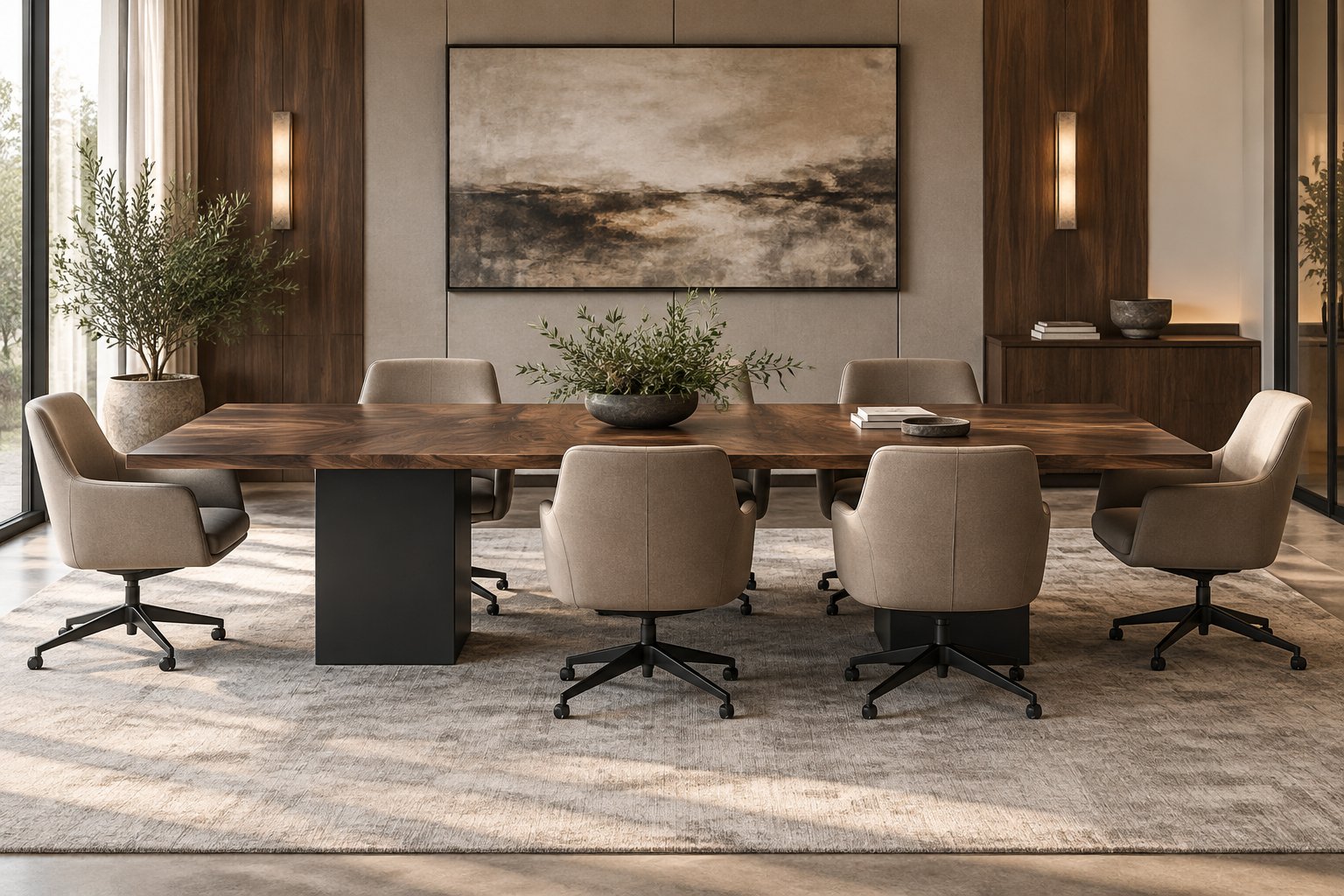
What makes a conference table high end?
Five things, and you can check every one of them before you buy. Finish color and styling come after these. If a table gets these right, it will still look good in ten years. If it misses them, no amount of styling will hide it.
- The top is solid hardwood all the way through, not a thin layer over a manufactured core.
- The top has real thickness. Ours are 1.5 inches of solid wood.
- The base is placed so chairs slide in along the full length and nobody straddles a leg.
- The finish can be touched up or redone, so a scratch is a repair and not a replacement.
- The size was set by your room and your seat count, not by what was in stock.
If you are earlier in the process and still deciding on shape and size, our conference table buyer’s guide covers the full range. This page is for the buyer who already knows they want a serious table and is trying to tell the good ones apart.
Solid wood or veneer: which one are you paying for?
Most office tables described as “wood” are veneer: a thin slice of hardwood glued over particleboard or MDF. Veneer is not a scam. It is stable, consistent from board to board, lighter to move and cheaper to make. For a training room that gets replaced every few years, it can be the sensible choice.
Where veneer falls short is age. The face layer is too thin to sand, so a deep scratch or a water ring is there for good, and the edges are where it chips first. A solid top can be sanded and refinished, and the grain you see on the surface runs through the board. We wrote a fuller solid wood vs. veneer comparison if you want the details.
How thick should a high end conference table top be?
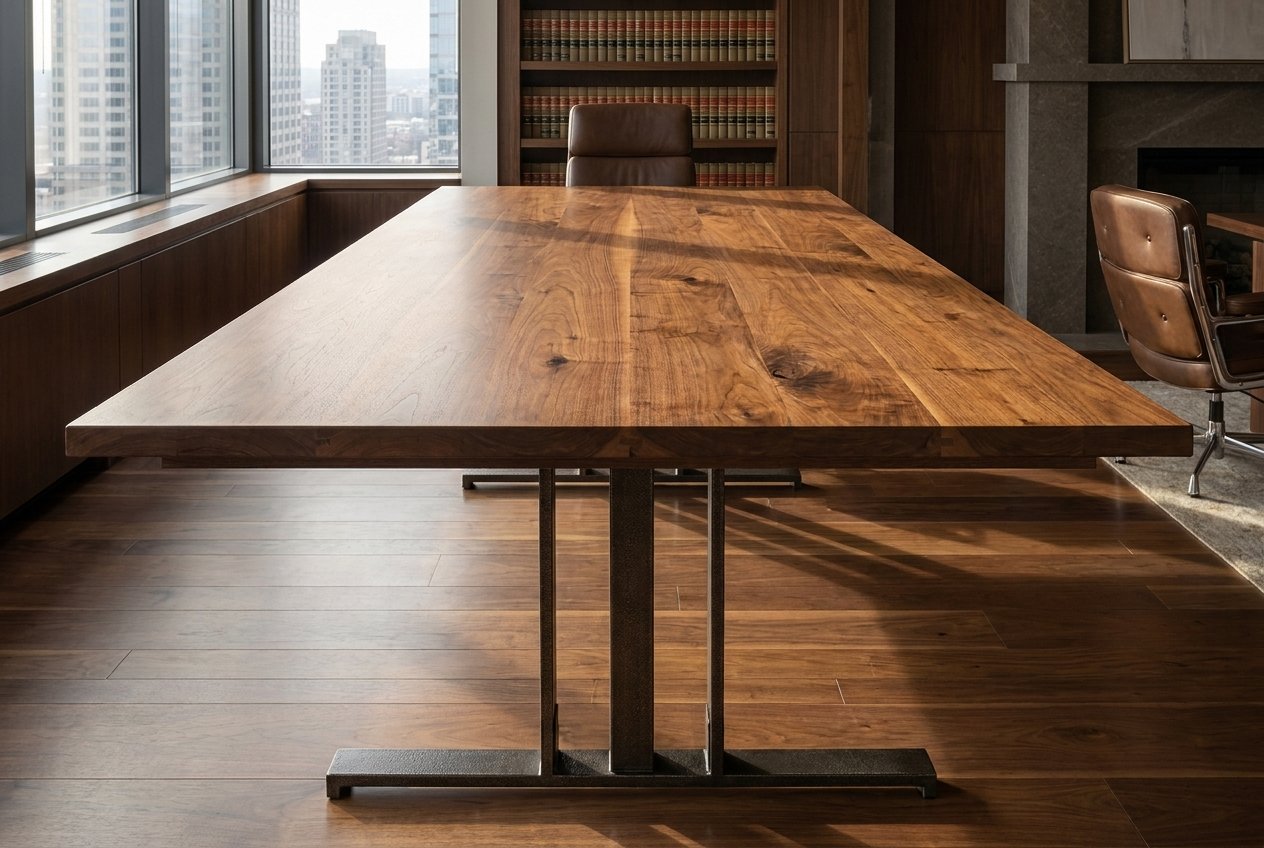
Look for 1.5 inches of solid hardwood. That is what we build every conference table top to, and it gives a long table the stiffness to span between bases without sagging.
Be careful with how thickness is shown. A table can look 2 or 3 inches thick from the side because of a deep edge band or an apron, while the field of the top is much thinner. Ask for the thickness at the center of the top, or look underneath. A solid top looks the same on the bottom as it does on the edge.
Does the base matter as much as the top?
On a long table, yes. The base decides where chairs can go, how the table feels when someone leans on it, and whether the end seats are usable. A few things to look at:
- Where the legs or pedestals sit. Bases set well in from the ends leave the corner and end seats open.
- Knee room along the sides. A crossbar or stretcher low and centered stays clear of feet.
- Steel or wood. Hand-welded steel reads modern and stays slim; a wood base reads warmer and heavier.
- Delivery. Ask how a 14 or 16 ft table gets through your door, hallway and elevator before you order.
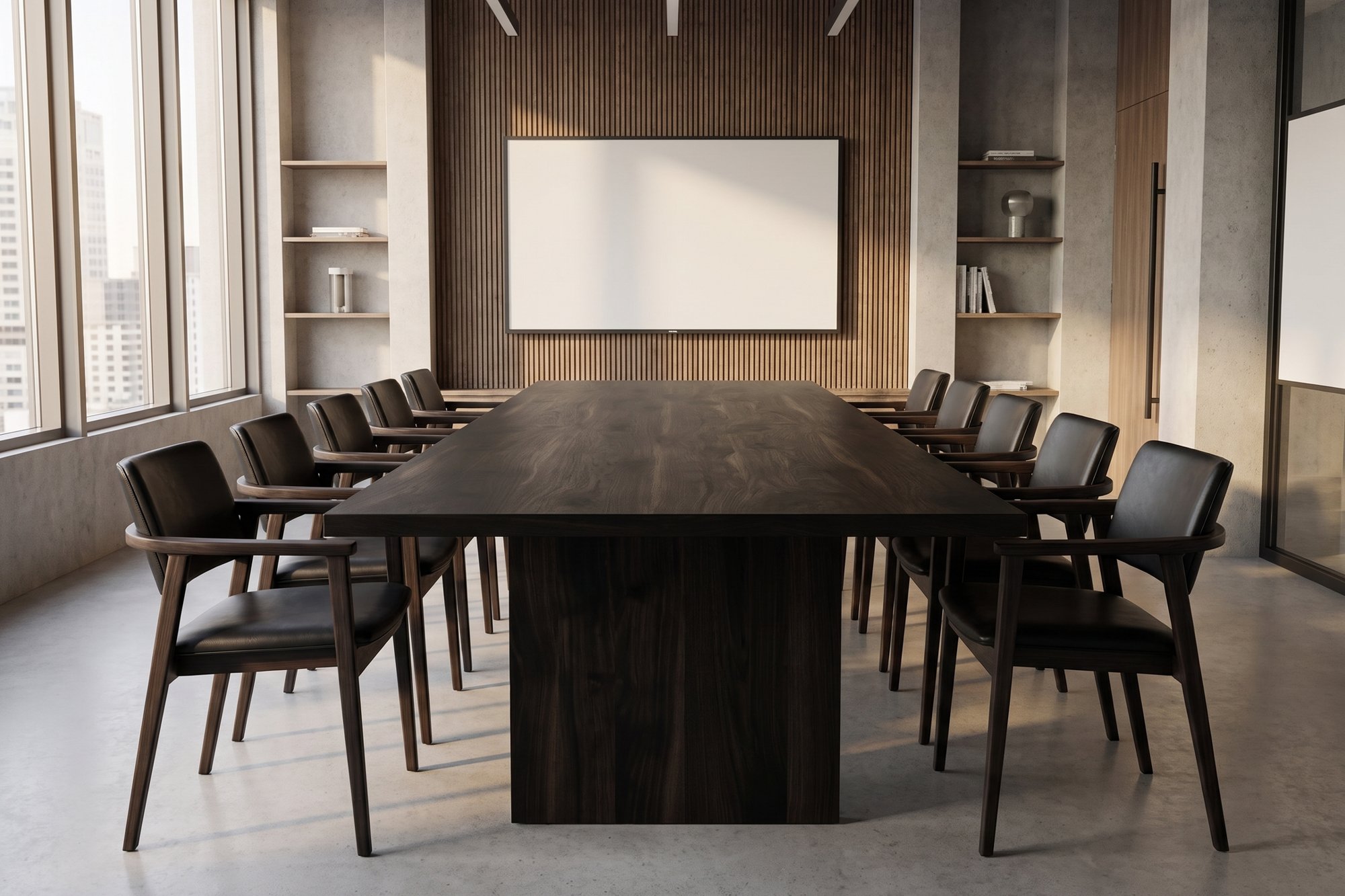
High end vs. mid-range vs. entry level: how do they compare?
The table below is a general picture of the three tiers you will run into when shopping. Individual tables vary, so treat it as a list of questions to ask rather than a verdict on any one brand.
| What to check | Entry level | Mid-range commercial | High end, built to order |
|---|---|---|---|
| Top material | Laminate or veneer over particleboard | Veneer over MDF or plywood | Solid hardwood throughout |
| Top thickness | Often 1 inch or less | Varies; thick edge band is common | 1.5 inches solid on our tables |
| Sizes | A few stock lengths | Stock lengths, some modular | Built to your room, up to 20 ft by 5 ft from us |
| Species and finish | Printed or stained to match | A short list of veneers | Walnut, white oak, red oak or maple in a range of finishes |
| Repair over time | Replace the top | Limited touch-up | Sand and refinish |
| Base | Generic legs | Panel or metal frame | Designed for the table, wood or hand-welded steel |
| Power and data | Add-on grommet | Modules on some models | Built in where the model allows |
| Timing | Ships from stock | Ships from stock or quick-ship | Made to order; see the product page for current production time |
| Who it suits | Short-term or high-turnover rooms | Large rollouts that need matching tables | The room clients see, built to last decades |
Which wood looks the most high end?
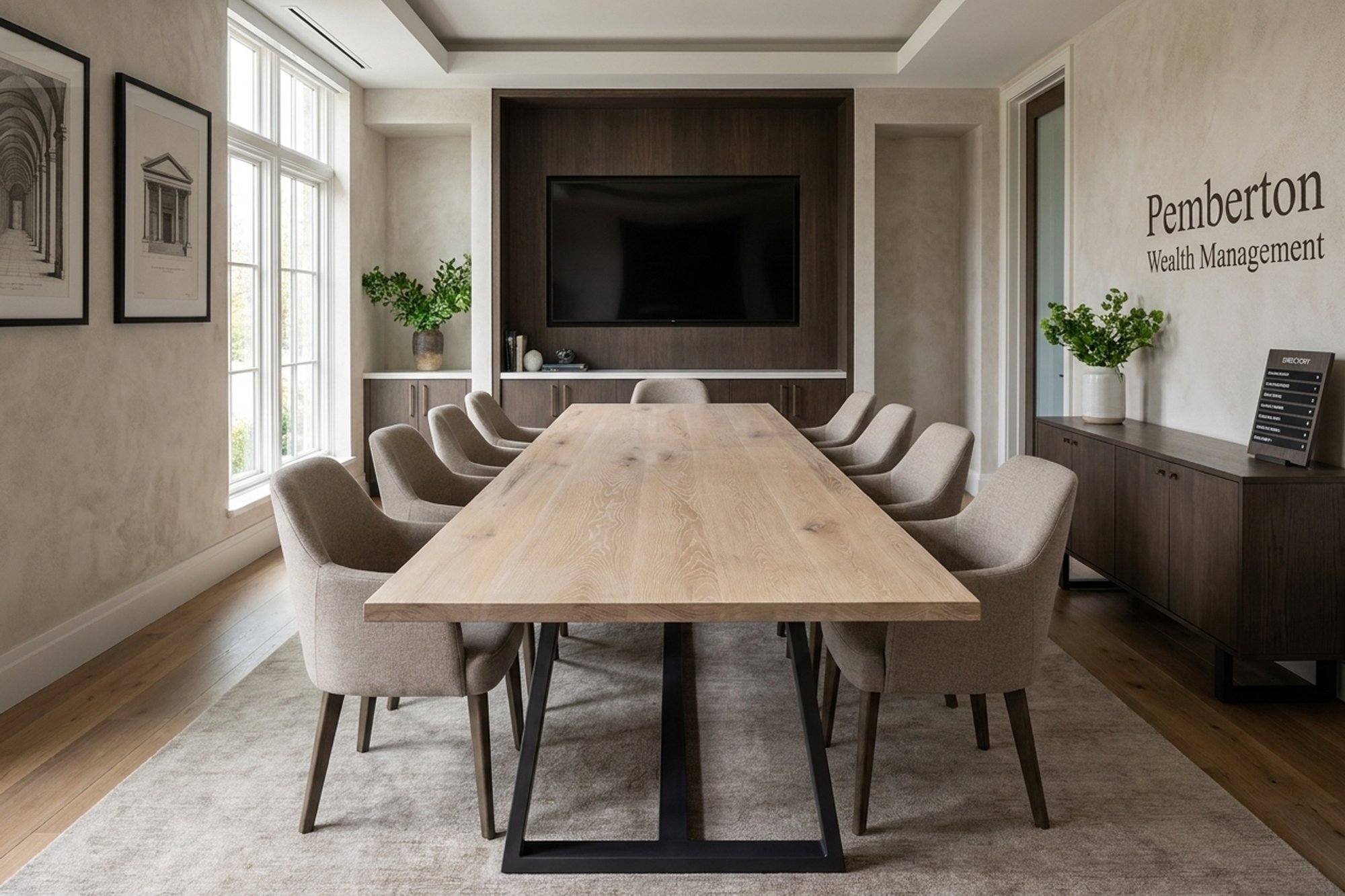
Walnut is the one most people picture in a boardroom. It is dark, even and rich, and it holds up to a lot of handling. White oak is harder and lighter, and it keeps a large room from feeling heavy. Red oak has a bold grain that takes a black finish well. Maple is the cleanest and most modern of the four.
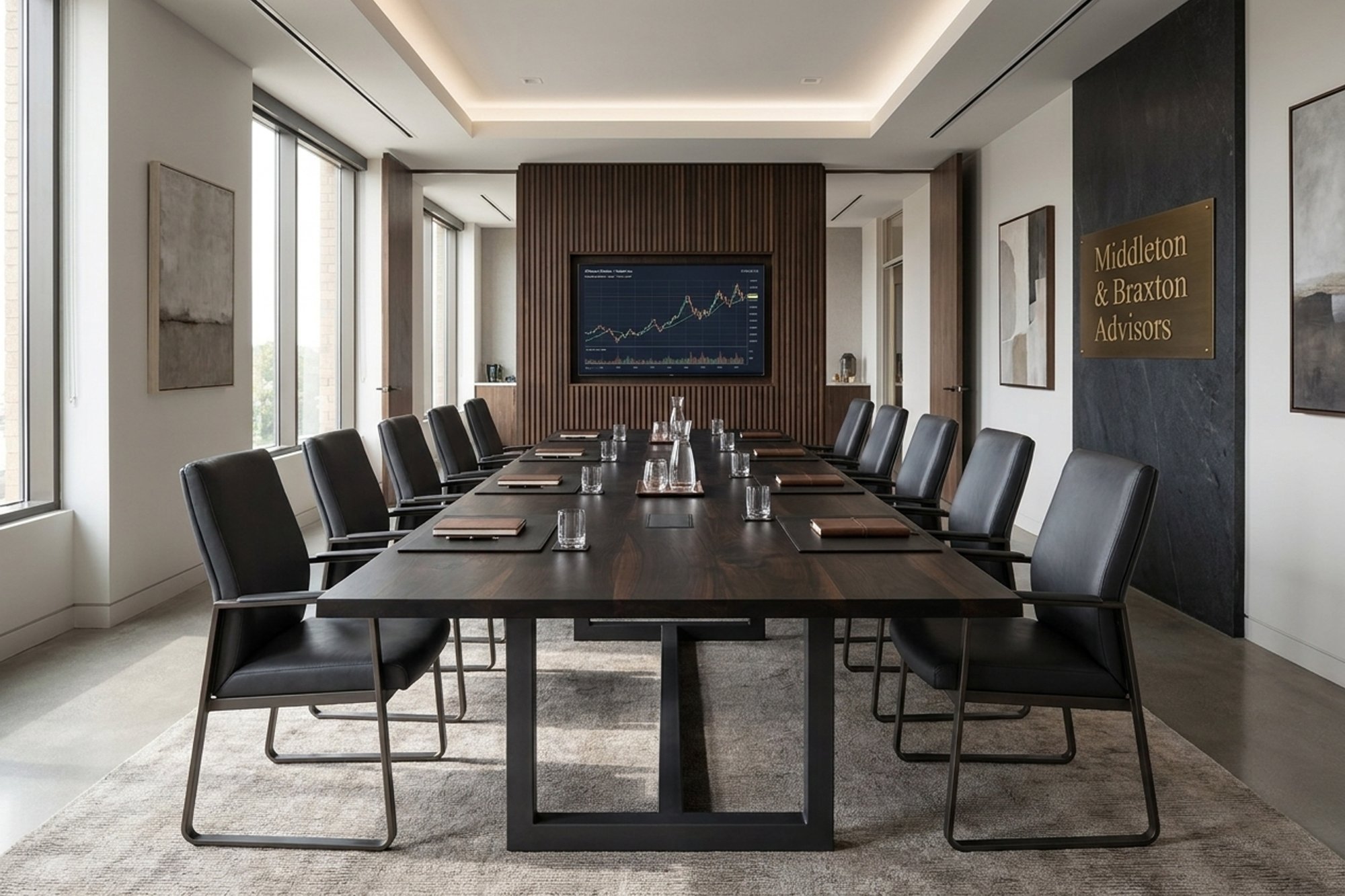
A black finish changes how a species reads. On oak, it settles into a deep brown that lets the grain show through. On walnut, it goes darker and quieter. Every finish we offer is one of our Signature in-house finishes, applied in the shop, and all of our lumber is American hardwood. If you are torn, order samples: there is a small fee, and it is credited toward your order.
What size and width read as high end?
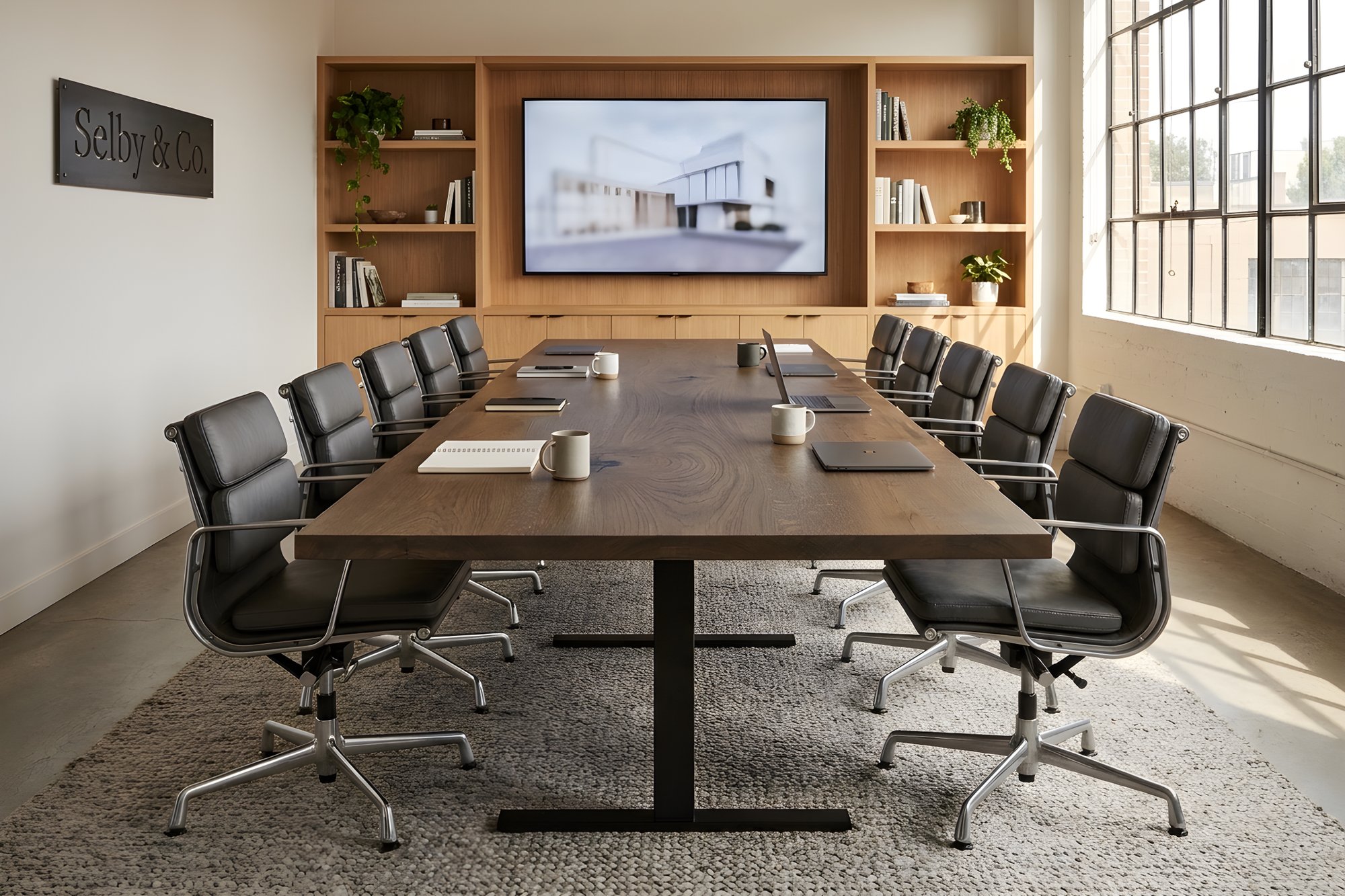
Width does more than length. A 36 inch table works in a narrow room, but people sit close across from each other. At 54 to 60 inches, there is room for laptops, papers and a centerpiece without anyone reaching into the other side. We build conference tables up to 5 ft wide.
Spacing does the rest. Standard seating gives each chair about 30 inches of edge. Leadership rooms tend to use 36 inches, which is why a high end table often seats fewer people than its length suggests. For very long rooms, see our page on tables over 16 feet.
When is a Fargo Woodworks table not the right fit?
We would rather tell you now than after you order. A table from us is probably the wrong choice if:
- Your project requires contract-grade certifications or fire rating documentation for the furniture. We do not make those claims.
- You need the table next week. Everything is made to order, and production starts when you order.
- You want a single top longer than 20 ft or wider than 5 ft.
- You want glass, stone or laminate instead of wood.
- You need flip-top or rolling training tables that get reconfigured every day.
- You want a completely uniform surface. Solid wood has grain changes, color shifts and the occasional knot, and we treat those as part of a handmade table.
If none of those apply, a solid hardwood table built to your room is the version that ages well.
How do you check a high end conference table before you buy?
Whoever you buy from, these questions sort the real thing from the photo quickly:
- What is under the surface: solid hardwood, veneer, or laminate?
- How thick is the top at the center, not at the edge?
- Can the finish be repaired or redone, and by whom?
- Can I see a physical sample of the species and finish?
- Which power and data options does this model support?
- How will it be delivered, and is white-glove delivery available?
From us: nationwide shipping, white-glove delivery available on request, and a free design consultation for custom projects.
High end conference tables we build
Each model below is solid hardwood, made to order, and can be sized to your room. Pick the base you like, then set the length, width, species and finish on its page.


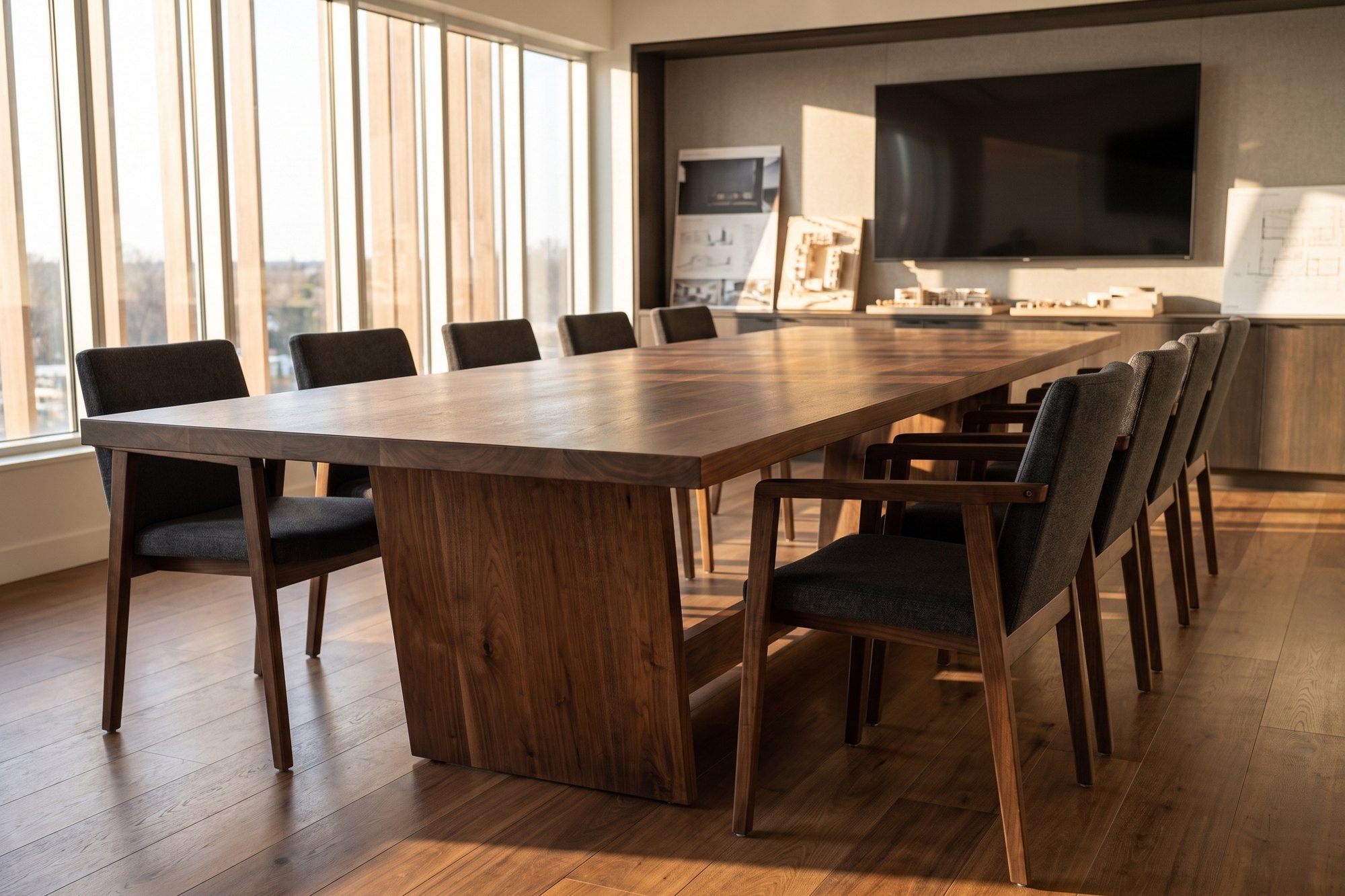


See every model on the conference tables collection page.
Questions about high end conference tables
What makes a conference table high end?
A solid hardwood top with real thickness, a base designed around the people sitting at it, a finish that can be repaired, and a size built for the room. Price and photos do not tell you those things; the spec sheet and the underside of the table do.
Are high end conference tables solid wood?
The best ones are. Many expensive office tables are veneer over particleboard or MDF, which looks fine on day one but cannot be sanded back if the top gets scratched. Ask what is under the surface before you compare prices.
How thick is a high end conference table top?
Ours are 1.5 inches of solid hardwood all the way through. Some tables show a thick edge band over a thin core, so measure in from the edge or ask for the top thickness at the center.
What wood is best for a high end conference table?
Walnut is the classic boardroom choice for its depth of color. White oak is harder and lighter in tone. Red oak takes a black finish well, and maple suits a clean, modern room. All four are solid American hardwood.
Can a high end conference table have power built in?
Yes. Power and data modules, grommets and cable management can be built into the top. Options vary by model, so we confirm them with you before the build starts.
How long does a custom conference table take to build?
Every table is made to order in Fargo, North Dakota, and production starts when the order is placed. The current production time is listed on each product page.
Build yours to the room
Start with the room size and the seat count, then choose a base and a wood. Made to order in Fargo, North Dakota, with nationwide shipping and white-glove delivery available on request.
Trusted by Industry Leaders