
A veneer top is a slice of real wood, often around 0.6 mm thick, glued over particleboard. A solid top is the same wood all the way through. Both look identical on day one. They stop looking identical somewhere around year three.
This is the honest version, including where veneer is the better buy. Fargo builds solid only, and that is a choice with trade-offs worth naming. See what we build in the commercial collection.
Solid wood vs veneer: the actual difference

| Solid hardwood | Veneer over particleboard | |
|---|---|---|
| Surface | The same wood through the full thickness | A sheet roughly 0.6 mm over a core |
| Repairing a scratch | Sands out | Sands through to the core |
| Repairing a chipped edge | Fills and blends | No repair, only replacement |
| Refinishing | Many times over decades | Once at most, usually never |
| Weight | Heavier | Lighter |
| Cost | Higher | Lower |
| Behavior in dry air | Moves slightly, by design | Stable, the core does not move |
| Typical service life | Decades | Cosmetic damage from year three |
Where veneer is genuinely the right choice

We do not sell it, and it still beats solid in several real situations:
- Curved and wrapped shapes. Veneer bends around a form. Solid wood does not, without steam bending or laminating.
- Very large flat panels. A 5 foot wide credenza door in solid wood will move and eventually cup. A veneered panel stays flat.
- Exotic or figured species. A burl or a rare figure exists in tiny quantities. Veneer is the only way to cover a large surface in it.
- Budget-led fit-outs. If a room is being refitted in five years anyway, paying for a thirty-year top is money in the wrong place.
- Weight limits. Some mezzanine floors and older buildings have real load constraints.
Where veneer fails, and why we build solid

The failure is always the same and it is always at an edge. Someone catches a corner with a chair or a cart, the thin face lifts, and the particleboard underneath is exposed. There is no repair for that. From then on the table is damaged goods in a room where clients sit.
- Edge banding lifts with heat and humidity, and a conference room near a window gets both.
- Water through a seam swells the core permanently. Solid wood dries out.
- A single deep scratch goes through the face. On solid, the same scratch sands away.
- Screws pull out of particleboard and do not hold a second time. Base fixings loosen.
- It cannot be refinished, so it cannot be brought back. A solid top sands to new in a day.
What the two cost over twenty years
The sticker price is the wrong comparison. A conference table gets bought once and lived with for a long time, so the number that matters is what the room costs across its life.
| Solid hardwood | Veneer | |
|---|---|---|
| Up front | Higher | Lower |
| Year 3 | Scratches sand out | First edge chips appear |
| Year 8 | Refinished once if wanted, looks new | Visible core damage at the edges |
| Year 15 | Sanded back and re-oiled, looks new | Replaced |
| Year 20 | Still the original table | Second replacement due |
That is the whole argument. Two replacements in twenty years costs more than one solid table, and the room looks worse for most of that time.
What to ask a supplier
Three questions separate the two quickly, whoever you are buying from:
- “Is the top solid or veneered?” If the answer is “solid wood construction” rather than “solid wood”, it is veneer.
- “How thick is the wear layer?” A real answer is a number in millimetres. No answer means it is thin.
- “Can it be refinished, and how many times?” Solid is many. Veneer is once at best.
What we build, and how
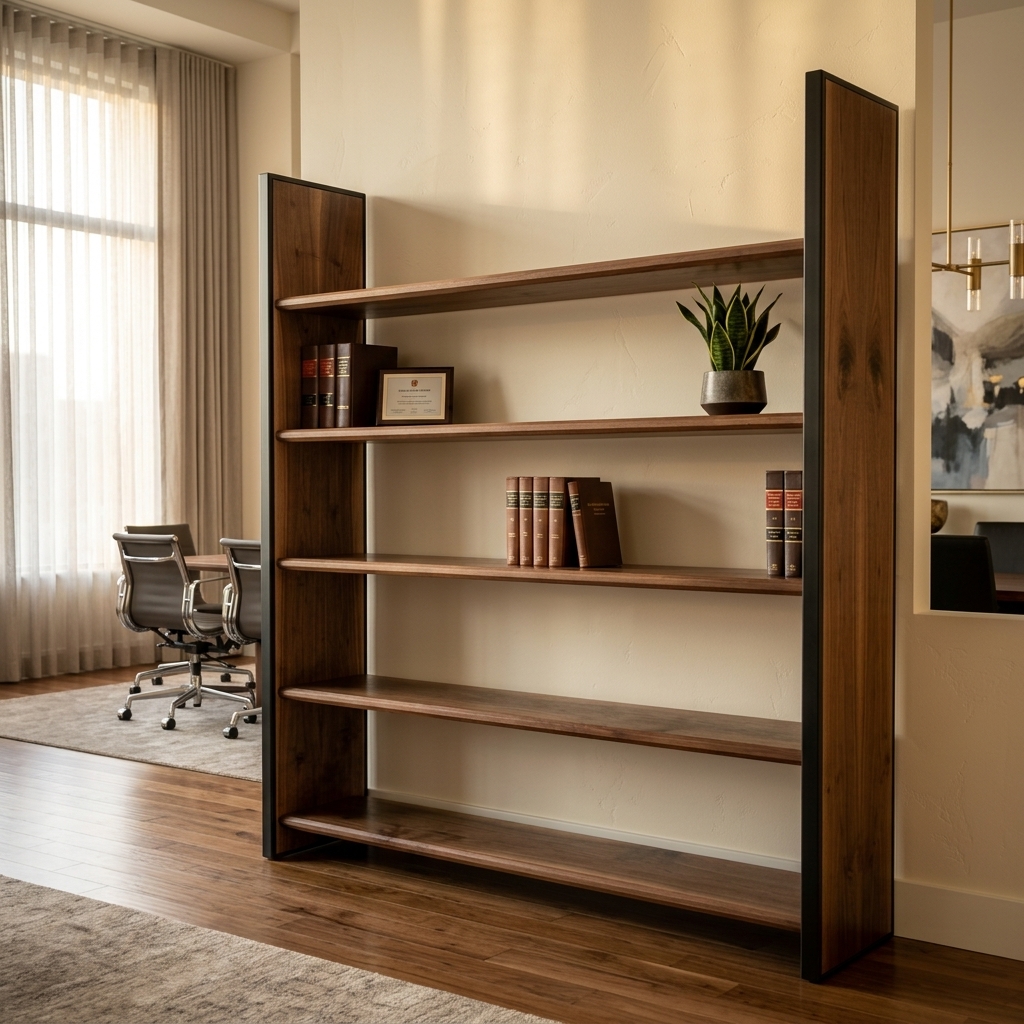
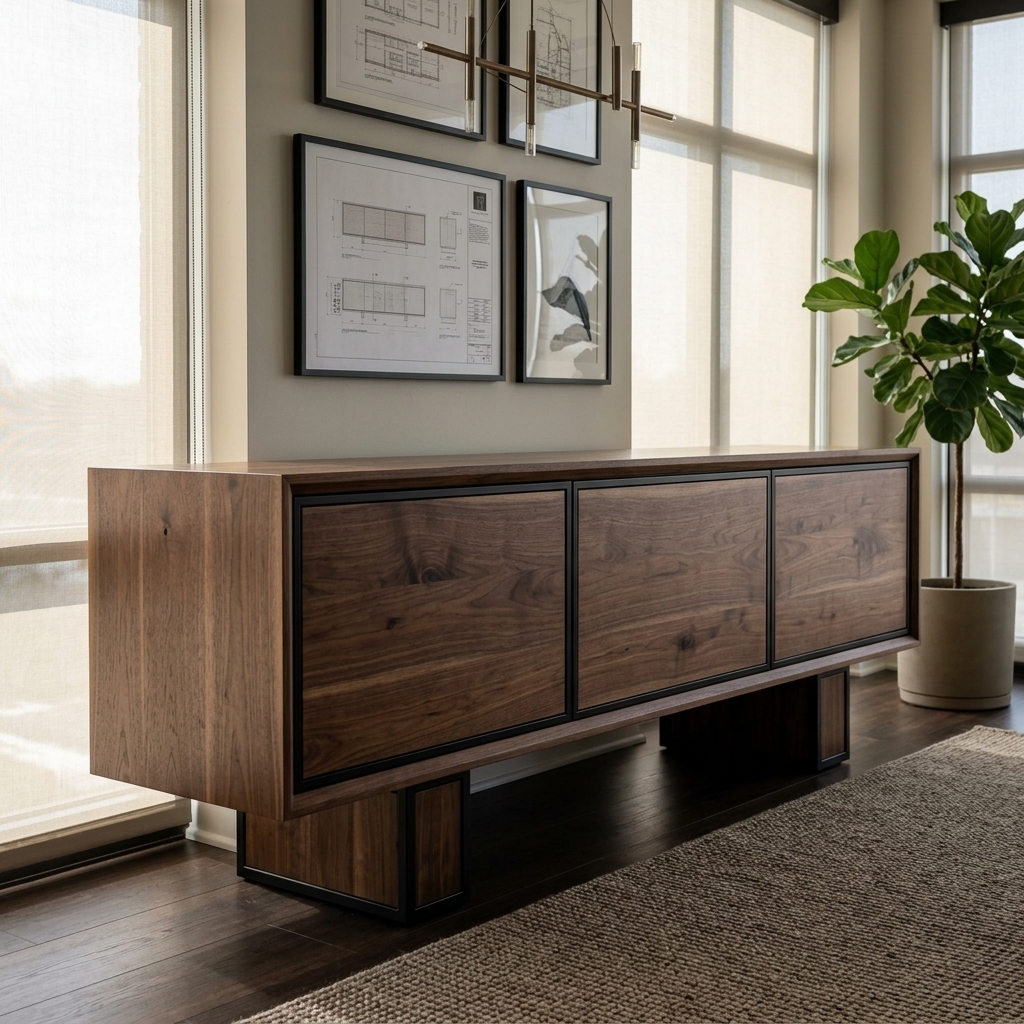
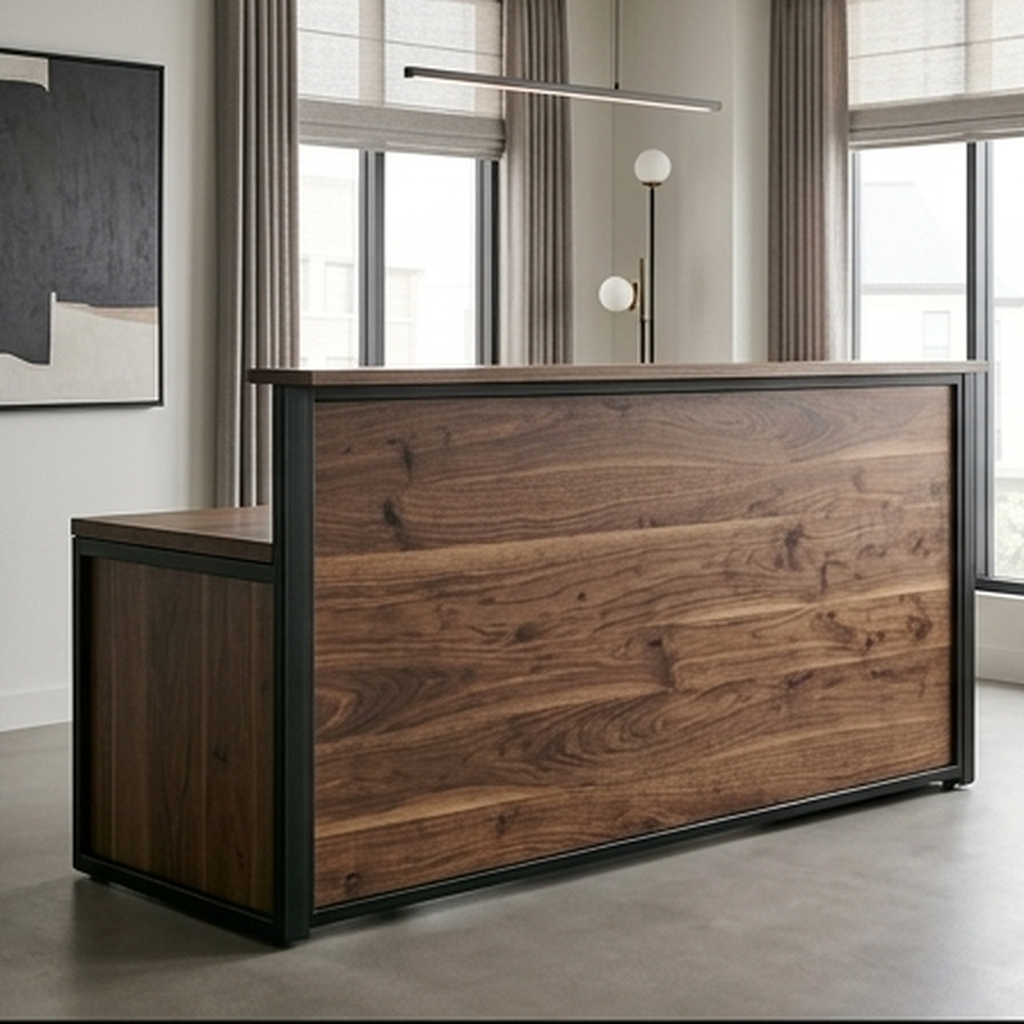
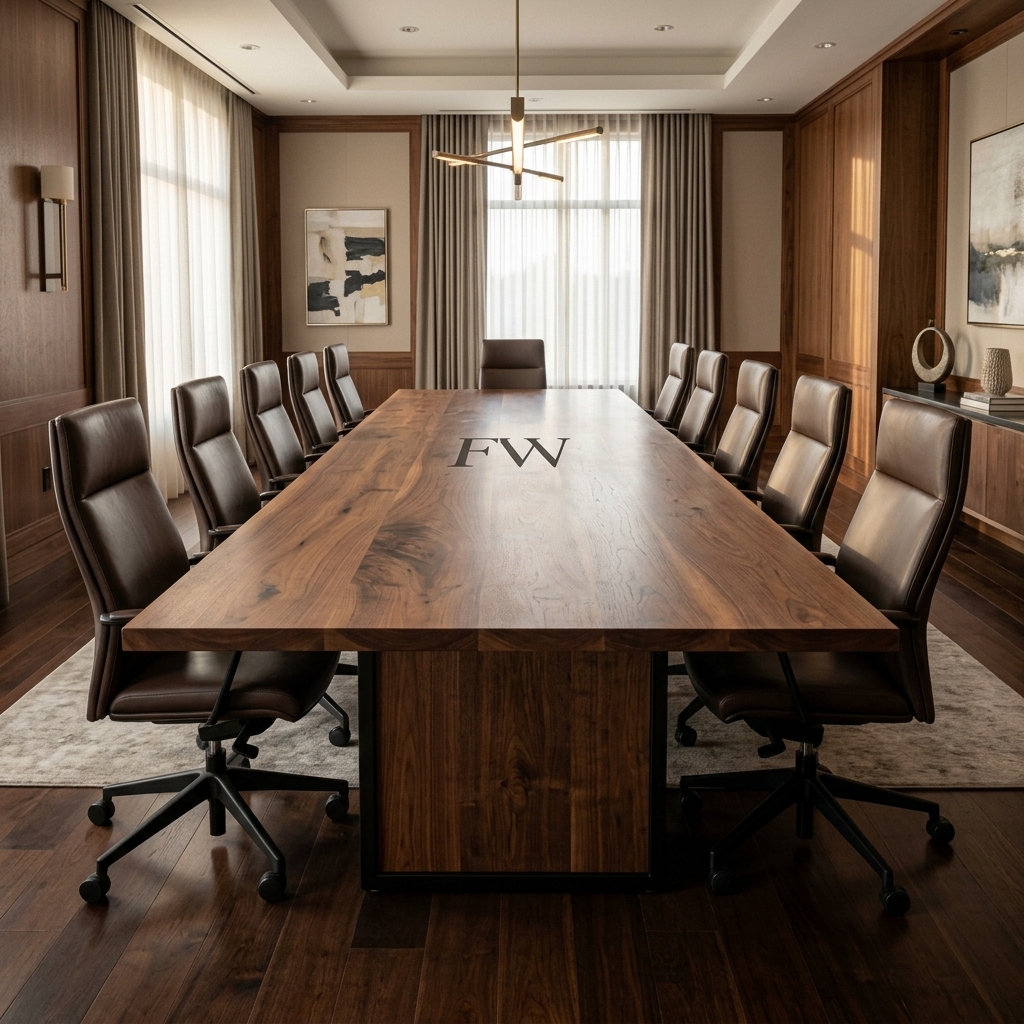
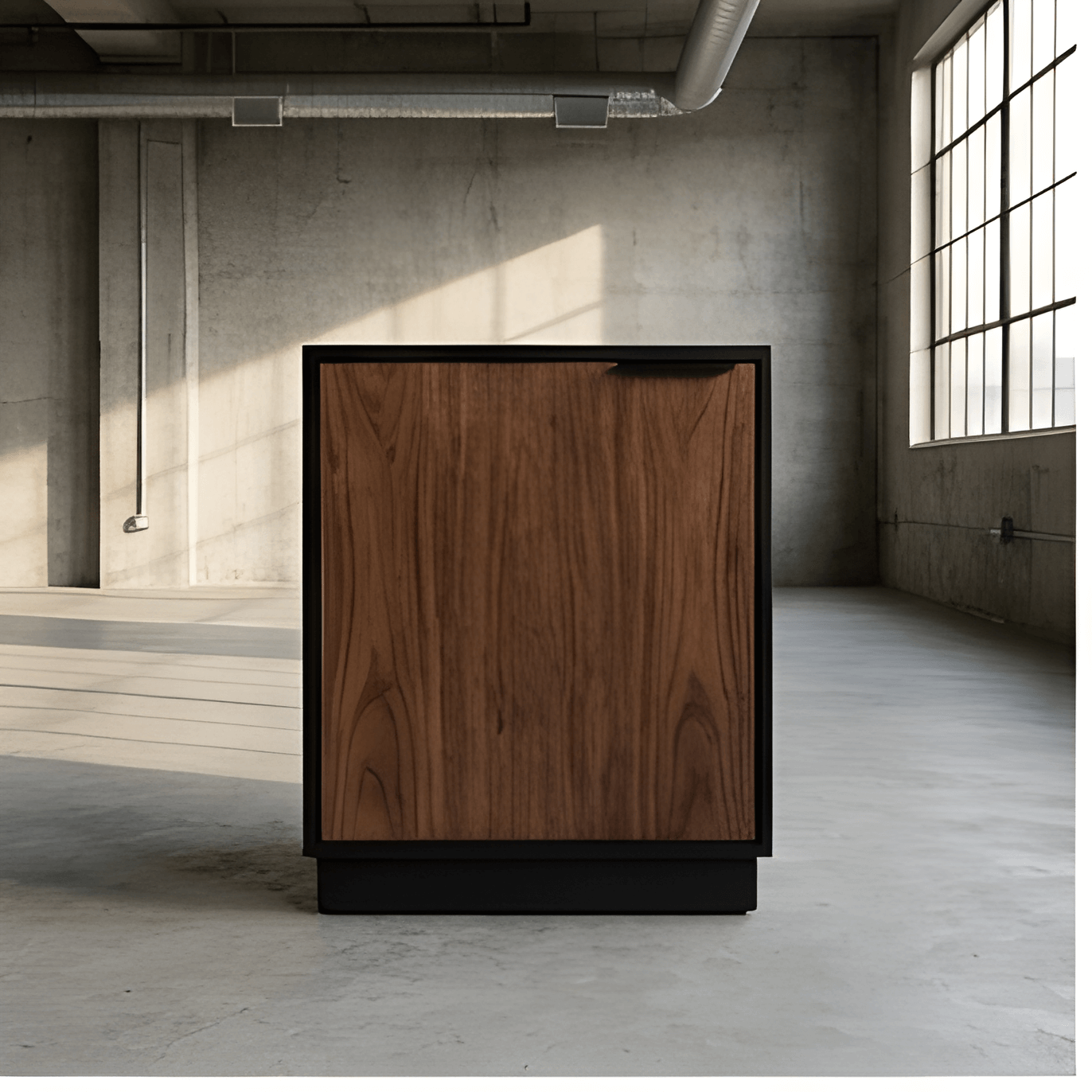
Every piece is solid hardwood throughout in black walnut, white oak or hard maple, built to your dimensions rather than a stock size.



The honest summary
If the piece is in one room for twenty years and every client sees it, solid is the right buy and the price difference stops mattering somewhere in year four. If it is a shape solid wood cannot make, or the room is temporary, veneer is the sensible answer and we will tell you so rather than sell you something you do not need.
Frequently asked questions
Is solid wood furniture better than veneer?
For anything meant to last decades, yes. Solid wood sands out scratches, fills gouges and refinishes many times. Veneer is a sheet around 0.6 mm over particleboard: once an edge chips there is nothing underneath to repair. Veneer wins on curved shapes, very large flat panels, rare figured species and tight budgets.
How thick is furniture veneer?
Commonly about 0.6 mm on modern commercial furniture, though it ranges. That is thin enough that a single deep scratch or one sanding goes through to the core.
Can veneer furniture be refinished?
Once at most, carefully, and usually not at all. There is not enough material above the core to sand. A solid top can be sanded back and refinished repeatedly across its life.
Why is solid wood more expensive?
More material, more waste in milling, more labor, and stock that has to be dried and selected for color and grain. The trade is that it lasts decades and stays repairable instead of becoming cosmetic damage.
Does Fargo Woodworks use veneer?
No. Every piece is solid hardwood throughout. Where veneer would genuinely be the better answer, such as a tightly curved form or a rare figured species over a large panel, we will say so.
Trusted by Industry Leaders