
Understanding Our Bulk Purchase Discounts on Large Conference Tables: Complete Guide to Pricing, Customization, and Benefits
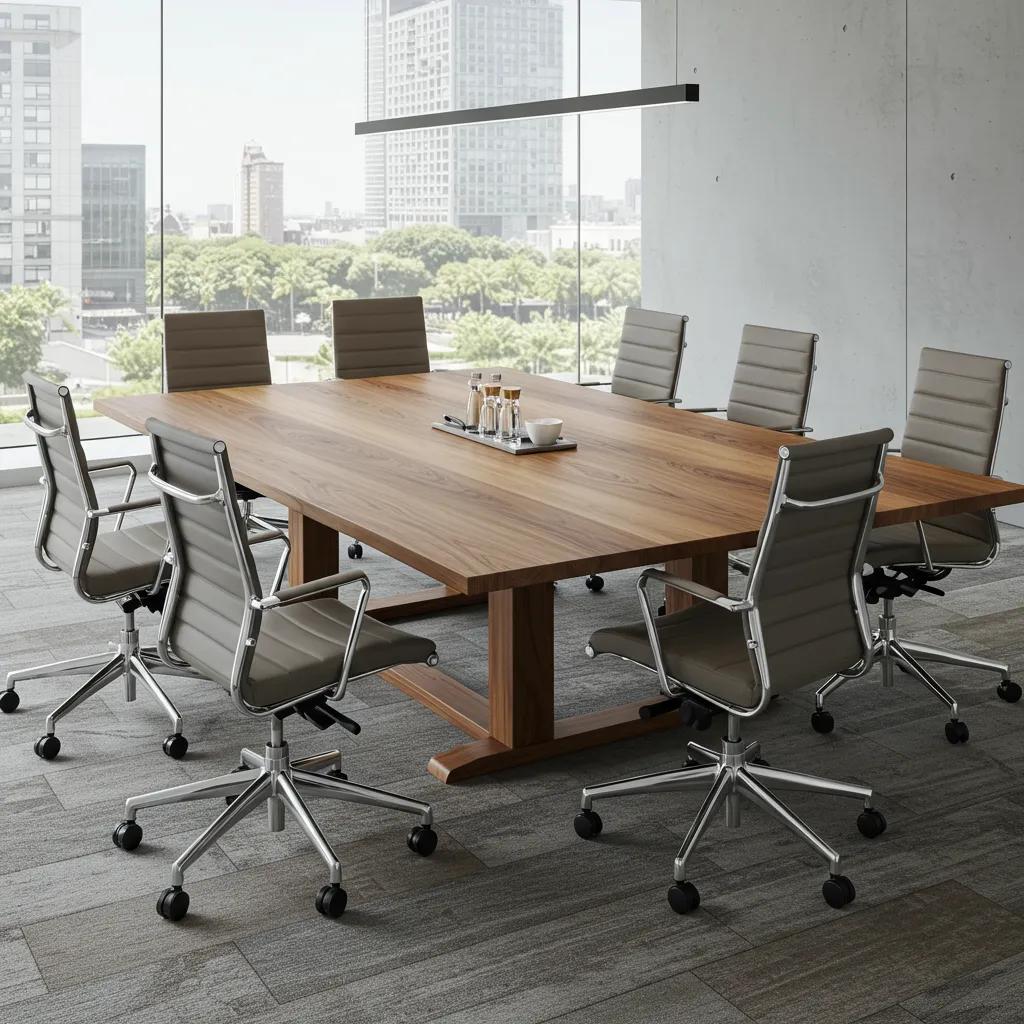
Bulk purchase discounts for large conference tables let organizations reduce per-unit cost while achieving uniform design across multiple rooms, and they are particularly valuable when specifying custom, solid wood pieces for executive or boardroom settings. This guide explains how tiered pricing, negotiated contracts, and production batching work for oversized, handcrafted conference tables and outlines the cost drivers that procurement teams must consider when ordering at scale. Readers will learn how discounts typically scale with quantity, how customization and integrated technology affect pricing, and what procurement teams should provide to get accurate volume quotes. The article maps the full purchasing journey—from discount mechanics and minimum order quantities to material selection, power/data integration, ordering steps, delivery, and installation—so facilities managers and designers can plan budgets and timelines confidently. Throughout, you’ll find practical lists, comparison tables, and step-by-step procedures designed to target common procurement questions about bulk conference table discounts and to clarify vendor capabilities for large commercial projects.
What Are Bulk Purchase Discounts on Large Conference Tables?
Bulk purchase discounts reduce the per-unit cost of large conference tables by applying tiered percentage reductions, fixed per-unit savings, or negotiated pricing based on total quantity, and they work because manufacturers can amortize setup, material sourcing, and production time across multiple units. Discount models commonly used in commercial furniture procurement include fixed tier bands, custom-negotiated contracts for repeat business, and seasonal or project-based allowances tied to lead time and finish complexity. Understanding how each model operates helps procurement teams forecast savings, compare bids fairly, and decide when to standardize specifications to secure better terms. The next subsections detail the mechanics of discounting and show typical minimum order quantities and illustrative pricing tiers to make these concepts actionable.
How Do Bulk Discounts Work for Commercial Conference Tables?
Bulk discounts for commercial conference tables typically operate either as fixed tiered percentages tied to quantity bands or as negotiated volume pricing that reflects project scope, and both approaches depend on repeatable specifications to lower per-unit costs. In tiered systems, each band (for example, 2–4, 5–9, 10+) carries a predetermined discount percentage, whereas negotiated pricing may include concessions for long-term commitments, multiple projects, or standardized options across orders. Customization and technology options—such as integrated power/data modules or logo inlays—alter the effective discount because they introduce additional material, labor, or subcontracting costs, which vendors either absorb partially or itemize separately. Production scaling and lead time are also central: higher quantities often justify longer production runs and batch finishing that reduce unit labor, but they can increase lead time, which procurement must weigh against schedule constraints.
What Are the Minimum Order Quantities and Pricing Tiers?
Minimum order quantities (MOQs) and pricing tiers give procurement teams a clear framework for estimating savings and planning budgets; below-MOQ exceptions are sometimes possible but typically require separate quoting due to one-off setup costs. Typical tier structures used by manufacturers are designed to balance material sourcing, production efficiency, and customization needs, and they are most effective when specifications (dimensions, finish, power modules) are standardized across units. The table below presents an illustrative tier structure to help teams visualize how discounts might scale for solid wood conference tables and to target featured-snippet style comparisons for procurement queries.
| Quantity Band | Typical MOQ Notes | Typical Discount Range |
|---|---|---|
| 2–4 units | Small multi-room rollouts; MOQ reflects setup for custom lengths | 5–10% |
| 5–9 units | Department-wide deployments; allows batch finishing | 10–18% |
| 10+ units | Large installations or enterprise rollouts; enables production batching | 18–30% |
This example shows how per-unit savings accelerate with volume and why standardizing dimensions or choosing repeatable finish options can move a project into a higher discount band. The following section provides a brief real-world example and explains when to request a bespoke quote for atypical specs.
After this explanation, a practical vendor example can help procurement see how these tiers apply in real projects. For instance, Fargo Woodworks offers tiered volume pricing for handcrafted solid wood conference tables and can provide customized quotes that reflect quantities, integrated technology, and logo inlay requirements—prospective buyers are encouraged to request a custom quote to get precise pricing for their project. This example illustrates how a manufacturer’s bulk program translates tiered discounts into actionable proposals and is a natural next step for teams ready to convert specifications into a procurement package.
Why Choose Fargo Woodworks for Wholesale Large Conference Tables?
Selecting a vendor for wholesale large conference tables requires confidence in material quality, repeatable craftsmanship, and logistical capability, and Fargo Woodworks positions itself around handcrafted solid wood construction, extensive customization, and commercial support that matter to procurement teams. Handcrafted solid hardwood slabs reduce variability versus veneers and provide superior durability and lifecycle value in high-traffic boardrooms, while locally sourced materials support sustainability considerations some organizations prioritize. Design consultation and dedicated commercial support help align table dimensions, power/data needs, and brand elements across multiple units, reducing risk and ensuring consistency. Nationwide shipping and experience with oversized pieces further streamline multi-site rollouts, enabling a single-vendor approach that simplifies procurement and warranty tracking.
What Makes Our Solid Wood Conference Tables Premium for Bulk Orders?
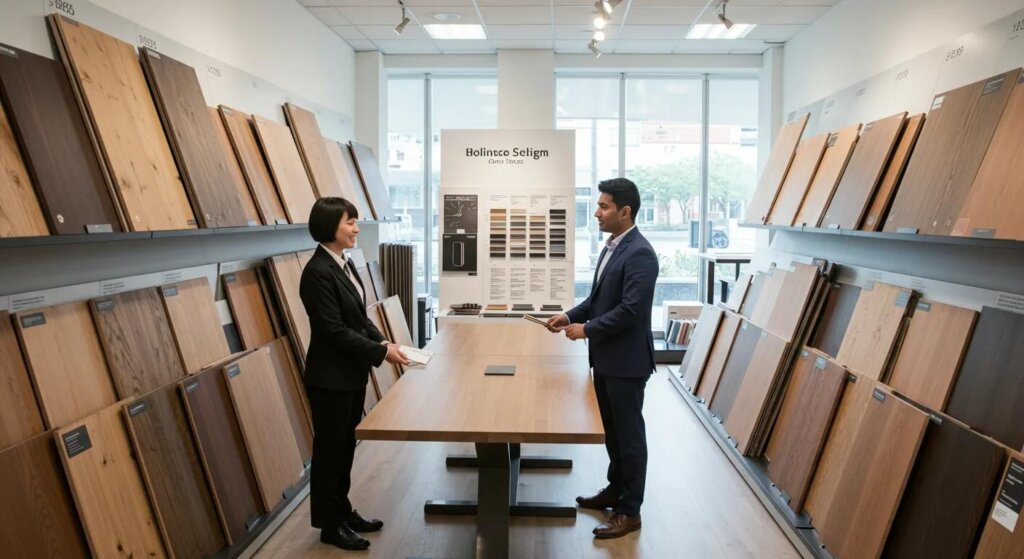
Solid hardwood conference tables provide structural longevity, repairability, and a premium aesthetic that retains value over time, and these attributes become cost-effective at scale when comparing lifecycle cost versus replacement-prone alternatives. Handcrafted construction controls grain matching, slab selection, and finish application so multiple tables in a run exhibit consistent color and texture, which is critical for brand-consistent interiors. Locally sourced materials reduce lead-time variability for certain species and support sustainability goals, while solid wood tops paired with robust base options (steel or trestle) deliver stability for integrated AV and power equipment. Together, these factors justify a premium upfront while reducing total cost of ownership for commercial clients.
How Does Our Customization Enhance Commercial Conference Table Discounts?
Customization can either increase unit cost or enable greater discounts depending on how options are standardized across the order; packaging common custom choices into repeatable options preserves economies of scale and unlocks deeper tier pricing. For example, specifying a single power module type, a unified finish, and consistent base style across multiple units allows a manufacturer to batch-process materials, reducing labor time per unit and lowering per-unit price. Repeatable logo inlays or plaques can be produced in a single run to spread tooling costs; conversely, unique inlays per table raise per-unit costs. Standardized customization packages are therefore a practical strategy to maintain design intent while maximizing discount benefits.
How Can Businesses Customize Large Conference Tables for Bulk Purchases?
Bulk orders demand a balance between design intent and production repeatability; choices about wood species, finish method, technology integration, and branding determine both aesthetic outcomes and procurement cost. Selecting materials and finishes that scale well across batches and choosing modular power/data solutions streamline production and installation, while early coordination with AV/IT teams prevents costly rework. The following subsections compare common wood types and outline how technology and branding can be implemented across multiple units to control cost and complexity.
What Wood Types and Finishes Are Available for Bulk Conference Tables?
Procurement teams typically choose from common hardwoods—white oak, red oak, maple, and black walnut—each with distinct appearance, durability, and cost implications that affect bulk pricing and lead time.
| Wood Type | Appearance & Durability | Finish Options / Cost Impact |
|---|---|---|
| White Oak | Neutral, stable, medium cost | Natural oil, lacquer; efficient for batching |
| Red Oak | Pronounced grain, durable, budget-friendly | Stains and lacquers; economical in volume |
| Maple | Light, uniform grain, hard | Clear finishes; requires careful color matching |
| Black Walnut | Dark, premium look, higher cost | Oil or satin lacquer; increases per-unit material cost |
This comparison clarifies material tradeoffs and shows why aligning on species and finish early reduces variability and allows for more aggressive volume pricing on large orders.
How Do Technology Integration and Branding Options Work in Bulk Orders?
Power and data modules, cable management, and brand elements are commonly standardized across bulk runs to limit per-unit customization costs and simplify installation logistics. Typical power/data modules include pop-up outlets, recessed power strips with USB ports, and integrated grommets; each module has wiring and placement implications that affect per-unit pricing and on-site electrical coordination. Branding options—such as repeated logo inlays, brass plaques, or laser-etched marks—are most cost-effective when produced in a single batch and applied consistently across units. Coordinating with facilities and AV teams during specification ensures module placement aligns with room layouts and reduces retrofit expenses.
Common choices for technology modules:
- Recessed power strip: provides multiple AC outlets and USB ports.
- Pop-up power module: offers concealment and easy access.
- Distributed grommet wiring: routes AV/data discreetly under the tabletop.
Standardizing these elements across the order minimizes cost per piece and eases on-site installation—next we’ll walk through the step-by-step ordering process that formalizes these decisions.
What Is the Step-by-Step Process for Ordering Bulk Conference Tables?
A clear procurement workflow reduces ambiguity and speeds project delivery: initial inquiry and design consultation, specification approval and volume quoting, production with quality controls, and scheduled delivery and installation form the core phases.
Each phase requires specific deliverables—site measurements and renderings at consultation, bill of materials and lead-time confirmations at quoting, staged quality checks during production, and coordinated logistics for multi-site delivery. Understanding these steps helps procurement teams prepare data and approvals needed to secure bulk discounts and avoid delays.
The following subsections explain how consultations support large projects and outline delivery and installation options that commercial buyers must plan for.
How Does the Design Consultation Support Bulk Commercial Projects?
Design consultation aligns spatial planning, AV requirements, and brand elements to produce repeatable specifications that reduce variability across multiple tables and protect volume pricing. During consultation, manufacturers or their designers typically produce scaled renderings, detailed drawings, and a bill of materials that list species, finishes, base options, and technology modules—these documents form the basis of the volume quote and production schedule.
Early consultation also surfaces site constraints such as door clearances and elevator capacity that affect shipping and installation methods, preventing costly on-site modifications. Deliverables from consultation thus de-risk the project and set expectations for lead time and sample approvals before full production begins.
What Are the Delivery and Installation Options for Large Bulk Orders?
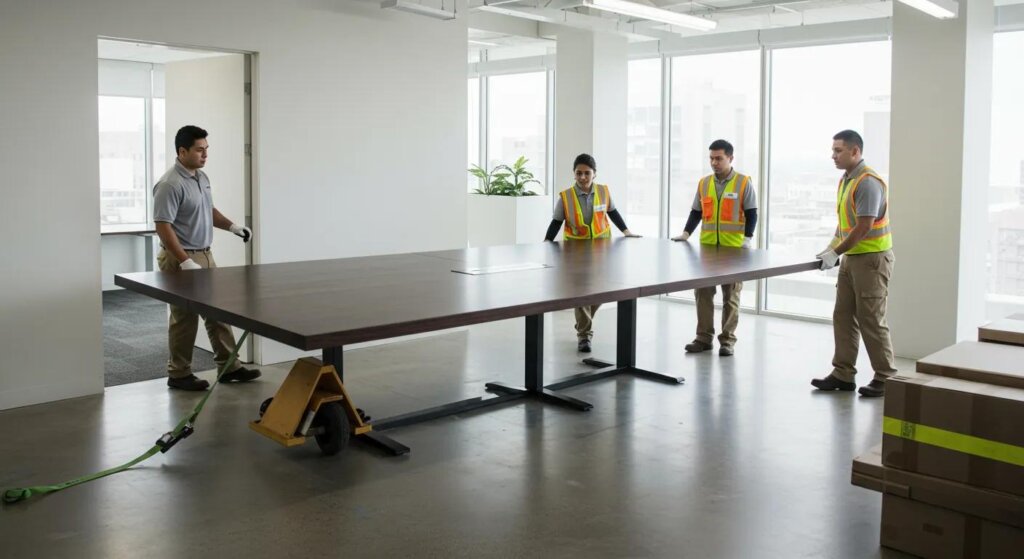
Delivery and installation options range from curbside drop-off to white-glove, inside delivery with on-site assembly and AV/electrical coordination, and the chosen level affects price and scheduling complexity for oversized conference tables.
For large orders, recommended choices often include palletized trucking for multi-site shipments, scheduled inside delivery with two-person assembly teams, and coordination windows that align with facility contractors; each option has distinct lead-time implications and cost impacts. Project managers should consider on-site assembly needs for integrated power modules and whether electricians or AV technicians must be scheduled concurrently.
| Service Level | Scope | Lead Time / Pricing Considerations |
|---|---|---|
| Curbside Delivery | Drop-off at site curb | Shorter lead times; lower cost; client arranges move-in |
| Inside Delivery | Delivery into designated rooms, basic assembly | Moderate cost; requires access planning |
| White-Glove | Inside delivery, full assembly, cleanup, coordination with trades | Higher cost; ideal for turnkey corporate rollouts |
Selecting an appropriate delivery tier and scheduling installers alongside AV/electrical contractors ensures that large-table installations complete on schedule and maintain the finish and integrity of handcrafted pieces.
What Are the Key Benefits of Buying Large Office Tables in Bulk?
Buying large office tables in bulk delivers measurable financial and operational benefits: lower cost per unit through batching, consistent aesthetics across spaces, simplified procurement through consolidated orders, and stronger post-sale support from vendors managing a single project.
Bulk procurement also enables more predictable budgeting and easier lifecycle planning because warranties, maintenance schedules, and replacement planning can be handled centrally.
For capital projects and phased rollouts, these advantages translate into time savings for facilities teams and more cohesive workplace environments. The next subsections quantify cost savings and outline dedicated support services that reduce implementation risk for large buyers.
How Do Bulk Purchases Save Costs and Ensure Consistent Aesthetics?
Bulk purchases reduce per-unit costs primarily through material buy-downs, reduced setup and finishing labor per table, and improved production efficiency via batching, and they assure consistent aesthetics by enabling grain selection and finish application across a run. Example scenarios show how batch finishing reduces drying and labor time per unit and how selecting the same species and finish across all tables prevents visual mismatch between rooms. Quality control measures—such as matched-slab selection, centralized sanding and finishing stations, and final inspection protocols—further ensure uniformity. Additionally, procurement advantages like single purchase orders, consolidated invoicing, and standard warranties simplify administrative overhead.
Key ways bulk buying saves cost and ensures aesthetics:
- Batch material sourcing reduces raw material premiums.
- Batch finishing lowers labor allocation per unit.
- Matched-slab selection ensures visual consistency.
These measures help procurement secure both economic and design outcomes that small, ad-hoc orders often cannot match.
What Dedicated Support Services Are Offered for Commercial Clients?
Commercial clients benefit from vendor services that include project management, installation coordination, extended warranty options, and post-sale maintenance programs, which together streamline multi-table rollouts and preserve long-term value. Project management services coordinate lead times, delivery windows, and on-site installation teams, while installation coordination with AV and electrical contractors ensures technology integrations work as specified. Extended warranty and repair services for solid wood components provide a safety net for high-use corporate environments. Vendors that offer bundled commercial services reduce the internal workload for facilities departments and help maintain consistent performance across multiple sites.
What Are the Most Common Questions About Bulk Conference Table Pricing?
Procurement teams frequently ask which features affect pricing, whether technology is included, and what information vendors need to prepare accurate volume quotes; concise, direct answers help teams move from intent to action. Clear guidance on power module inclusions, placement, and quoting requirements reduces back-and-forth and speeds approval cycles, and providing a checklist of required details helps vendors return reliable proposals within expected timelines.
The following subsections answer specific PAA-style questions and close with instructions for requesting a custom volume quote suited to large commercial orders.
Do Bulk Conference Tables Include Power Outlets and USB Ports?
Power outlets and USB ports are often available as configurable options, but whether they are included in a base bulk price varies by vendor and specification; typically, standard bulk quotes itemize technology modules separately so buyers can see base furniture cost plus modular electronics pricing. Common power/data modules include recessed strips with AC and USB-A/USB-C ports, pop-up units that remain concealed when not in use, and distributed grommet wiring for fixed AV setups; each option has wiring, electrician coordination, and per-unit pricing implications. Placement and quantity per table influence both product cost and installation complexity, so procurement should confirm whether vendor quotes include electrical rough-in and field wiring or if those are quoted as separate services. Coordinating tech specs with the vendor during the quoting stage prevents costly retrofits and clarifies whether the proposed discount applies to furniture-only pricing or to turnkey, technology-inclusive solutions.
How Can Businesses Request Custom Quotes for Volume Pricing?
To obtain accurate volume pricing, vendors generally request a concise specification package including quantity, table dimensions, selected wood species and finish, preferred base style, technology/module requirements, desired branding elements, target delivery windows, and installation service level; providing this information upfront accelerates turnaround and improves quote accuracy.
Typical turnaround times for a commercial volume quote range depending on complexity and sample approvals, but vendors aiming to support large projects often provide preliminary estimates within a few business days and finalized quotes after drawings and consultation.
Recommended next steps include scheduling a design consultation, submitting floor plans or room photos, and requesting finish samples to approve before production; buyers may also request a formal proposal that itemizes per-unit costs and associated delivery/installation fees.
- Quote checklist: Quantity, dimensions, wood species, finish, power/data needs, branding, delivery level.
- Expected vendor response: Preliminary estimate quickly; final quote after drawings and sample approvals.
- Recommended action: Schedule design consultation to finalize repeatable specs.
This checklist helps procurement teams supply the right data the first time and move efficiently from budgetary review to contract.
- Project-ready procurement: Consolidating specifications and choosing repeatable options helps maximize discounts and minimize surprises during production.
- Operational readiness: Early coordination with AV/electrical teams ensures technology integrations and installations proceed smoothly.
- Vendor partnership: Using a single vendor for production, delivery, and installation simplifies warranty and aftercare management for large deployments.
These practical next steps complete the guide and prepare teams to engage vendors with confidence in both pricing expectations and logistical planning.
Frequently Asked Questions
What factors influence the pricing of bulk conference tables?
The pricing of bulk conference tables is influenced by several factors, including the type of wood used, the complexity of the finish, and the inclusion of technology features like power outlets and USB ports. Additionally, the quantity ordered plays a significant role, as larger orders typically qualify for greater discounts. Customization options, such as unique designs or branding elements, can also affect the overall cost. Understanding these factors helps procurement teams make informed decisions and maximize their savings.
How can businesses ensure quality when ordering large quantities of conference tables?
To ensure quality when ordering large quantities of conference tables, businesses should engage in thorough vendor selection, focusing on manufacturers with a proven track record of craftsmanship and quality control. Requesting samples of materials and finishes before placing a bulk order can help assess quality. Additionally, establishing clear specifications and maintaining open communication with the vendor throughout the production process can help mitigate risks and ensure that the final products meet the desired standards.
What are the common delivery options for bulk conference table orders?
Common delivery options for bulk conference table orders include curbside delivery, inside delivery, and white-glove service. Curbside delivery is the most economical, involving drop-off at the site curb, while inside delivery includes placement in designated rooms and basic assembly. White-glove service offers the highest level of care, including full assembly and coordination with AV or electrical contractors. The choice of delivery option can impact lead times and costs, so businesses should consider their specific needs when selecting a service level.
How does customization impact the lead time for bulk orders?
Customization can significantly impact the lead time for bulk orders, as unique specifications may require additional production time. Standardizing certain elements, such as wood species, finishes, and technology modules, can streamline the manufacturing process and reduce lead times. Early coordination with vendors to finalize designs and specifications is crucial to avoid delays. Businesses should also factor in potential lead time extensions for custom features when planning their procurement timelines to ensure timely delivery.
What are the benefits of using a single vendor for bulk conference table purchases?
Using a single vendor for bulk conference table purchases offers several benefits, including simplified procurement processes, consistent quality, and streamlined communication. A single vendor can provide cohesive design elements across multiple tables, ensuring aesthetic uniformity. Additionally, managing warranties and post-sale support becomes easier with one point of contact. This approach can also lead to better pricing negotiations and more favorable terms, as vendors are often willing to offer discounts for larger, consolidated orders.
How can businesses effectively manage the installation of bulk conference tables?
Effective management of the installation of bulk conference tables involves careful planning and coordination with installation teams. Businesses should schedule installation during off-peak hours to minimize disruptions and ensure that all necessary personnel, such as AV and electrical contractors, are available. Providing clear site layouts and specifications to the installation team can help streamline the process. Additionally, conducting a pre-installation walkthrough can identify potential challenges and ensure that the installation proceeds smoothly and efficiently.