
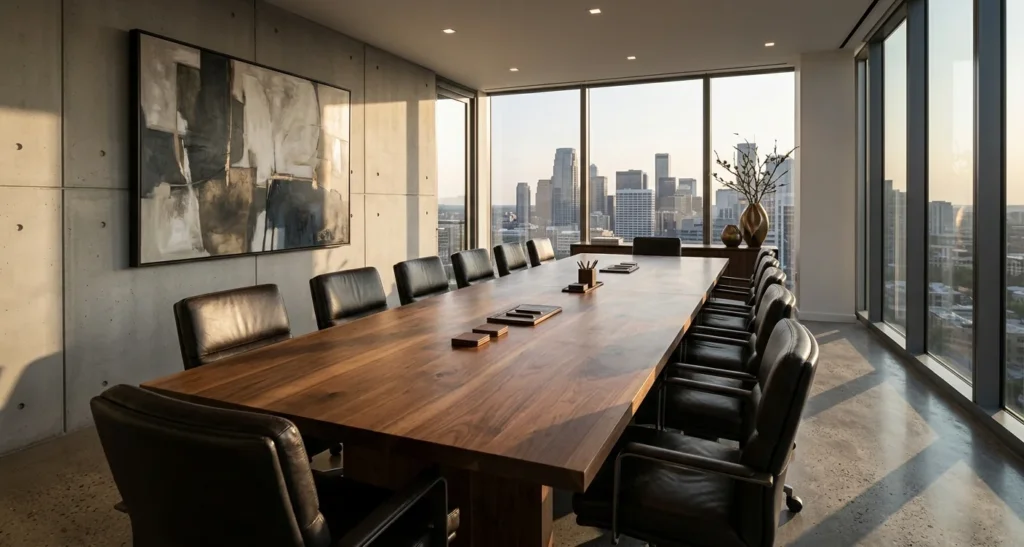
Explore our Large Conference Tables
All of our conference tables can be customized up to 20′ long & 5′ Wide. Nationwide Shipping Available!
-
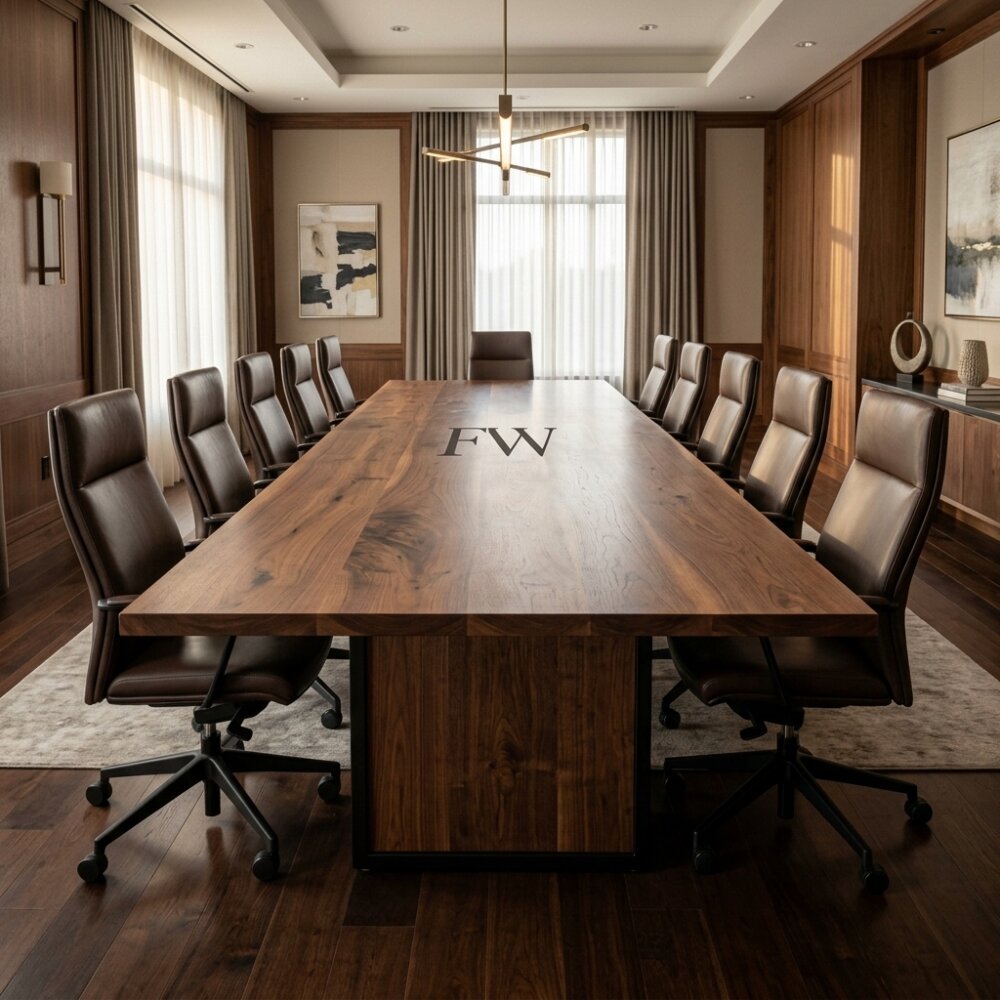
The Hartford Conference Table
From: $5,000.00 -

The Cassian Conference Table
From: $3,500.00 -

The Nordic Conference Table
From: $3,000.00 -

The Timberline Conference Table
From: $3,500.00 -

The Larsen Conference Table
From: $3,500.00 -

The Dakota Conference Table
From: $4,500.00 -

The Foundry Conference Table
From: $3,500.00 -

The Sequoia Conference Table
From: $3,500.00 -

The Apex Conference Table
From: $4,500.00 -

The Bennett Conference Table
From: $4,500.00 -

The Boulder Conference Table
From: $3,500.00 -

The Cascade Conference Table
From: $4,500.00
When it comes to making a statement in your boardroom, nothing commands attention quite like a large conference table. These impressive pieces, typically ranging from 10 feet and beyond, serve as the centerpiece of spacious meeting areas while accommodating a significant number of participants. They’re not just furniture—they’re symbols of authority perfect for high-profile presentations and strategic planning sessions.
The shape and size of your conference table dictates the dynamics of your meetings. Rectangular designs create formal environments conducive to focused discussions, while larger tables accommodating 10+ participants exude a sense of professionalism. Whether you’re hosting executive meetings, workshops, or collaborative sessions, the right table ensures comfortable seating arrangements and unimpeded movement throughout your space.
The Importance Of Large Conference Tables
Large conference tables command attention and accommodate significant numbers of participants in professional settings. Measuring 10 feet or longer, these substantial pieces serve as centerpieces in spacious boardrooms, conference halls, and executive meeting spaces. Their impressive size inherently conveys authority, making them ideal for high-profile presentations, negotiations, and strategic planning sessions.
The shape of a conference table directly influences meeting dynamics and collaboration. Rectangular tables, with their clean lines and balanced proportions, create organized environments conducive to formal discussions. This traditional shape maintains a sense of order while providing clear sightlines for all participants, enhancing communication effectiveness during important meetings.
Size selection significantly impacts the functionality of your meeting space. Large tables accommodating 10+ participants work best in spacious boardrooms where they provide ample surface area for documents, laptops, and presentation materials. Proper sizing ensures the table complements room dimensions, allowing comfortable seating arrangements and unobstructed movement around the perimeter.
Modern large conference tables integrate technology seamlessly into collaborative environments. Many feature built-in power outlets, wireless charging stations, and sophisticated cable management systems that keep technology accessible but unobtrusive. These smart design elements maintain the table’s professional appearance while supporting both in-person meetings and digital collaboration needs.
The right conference table transforms ordinary spaces into productive meeting environments. By combining functionality with professional aesthetics, large conference tables create settings where ideas flow freely and business decisions advance. Their presence establishes a dedicated space for teamwork, fostering environments where collaborative innovation thrives across industries from corporate to healthcare sectors.
Key Design Considerations
When selecting a large conference table, specific design elements directly impact both functionality and aesthetics. These considerations ensure the table meets practical needs while enhancing the overall meeting environment.
Size And Shape
The size and shape of a conference table dictate both capacity and meeting dynamics. Rectangular tables remain the quintessential choice for formal boardrooms, creating an organized environment with clean lines conducive to focused discussions. For capacity planning:
| Table Length | Seating Capacity |
|---|---|
| 10 ft | 8-10 people |
| 12 ft | 10-12 people |
| 14 ft | 12-14 people |
| 16 ft | 14-16 people |
| 18 ft | 16-18 people |
| 20 ft | 18-20 people |
For optimal comfort, allow 30 inches of table width per person and maintain 42-48 inches of clearance from the table edge to the wall. Ensure at least 36 inches of chair clearance and plan for 24 inches of table depth per side. Consider these minimum room dimensions for comfortable use:
- 10 ft Table: 14′ x 16′ room
- 12 ft Table: 16′ x 18′ room
- 14 ft Table: 18′ x 20′ room
- 16 ft Table: 20′ x 22′ room
- 18 ft Table: 22′ x 24′ room
- 20 ft Table: 24′ x 26′ room
Narrow rectangular tables maximize surface operating space, while boat-shaped and elliptical designs offer a more modern statement. For exceptionally large groups of 30-40 participants, custom tables ranging from 32-44 feet in length provide adequate accommodation.
Material And Finish
Material selection impacts durability, aesthetics, and budget considerations. Premium hardwood constructions feature solid wood like oak, cherry, walnut, maple, and rosewood, conveying traditional elegance and exceptional longevity. Oak stands as one of the hardest woods used in furniture making, offering incredible durability with a distinctive grain pattern. Maple provides a smooth touch with a tighter grain than oak and exceptional hardness.
Laminate conference tables present a practical, budget-friendly alternative with surfaces mimicking wood, stone, or other natural materials. These highly durable options resist scratches and stains, making them ideal for high-traffic areas. For modern aesthetics, metal conference tables incorporating steel or aluminum deliver sleek, contemporary appeal with outstanding strength.
- Solid hardwood construction
- Premium white oak standard options
- Hand-welded steel bases for stability
- Industrial-grade hardware components
- Pre-installed threaded insert systems for secure assembly
Placement And Layout
Proper placement and layout of large conference tables maximize their functionality while ensuring comfort for all participants. Strategic positioning transforms a basic meeting room into an efficient collaborative space where ideas flow freely and decisions advance.
Seating Arrangements
Effective seating arrangements around large conference tables create an optimal environment for productive meetings. The standard recommendation is to allow 30 inches of table width per person, ensuring comfortable personal space without overcrowding. For a 12-person conference table setup, I’d suggest planning for 5 guests on each side and one person at each end, providing everyone with approximately 3 feet of usable surface area. This configuration works particularly well with rectangular tables, creating clear sightlines across the table while maintaining a professional atmosphere.
| Table Length | Comfortable Seating Capacity |
|---|---|
| 10 ft | 8-10 people |
| 12 ft | 10-12 people |
| 14 ft | 12-14 people |
| 16 ft | 14-16 people |
| 18 ft | 16-18 people |
| 20 ft | 18-20 people |
Room Dimensions
Room dimensions play a crucial role in accommodating large conference tables without creating a cramped environment. The minimum room size increases proportionally with table length to maintain proper clearance and movement space. For a 10-foot conference table, a room measuring at least 14′ × 16′ provides adequate space, while a 20-foot table requires a minimum of 24′ × 26′. Maintain 42-48 inches of clearance from the table edge to the wall and ensure at least 36 inches of chair clearance for comfortable movement. Additionally, plan for 4-5 feet of space behind seated participants to allow easy access and egress without disrupting ongoing meetings.
| Table Length | Minimum Room Dimensions |
|---|---|
| 10 ft | 14′ × 16′ room |
| 12 ft | 16′ × 18′ room |
| 14 ft | 18′ × 20′ room |
| 16 ft | 20′ × 22′ room |
| 18 ft | 22′ × 24′ room |
| 20 ft | 24′ × 26′ room |
Accessibility Considerations
Accessibility considerations ensure all participants can comfortably use the conference space regardless of mobility needs. Position the table in a way that creates clear pathways of at least 36 inches wide around the perimeter, accommodating wheelchair users and allowing easy navigation throughout the room. Consider table height carefully—standard conference tables measure 29-30 inches tall, compatible with standard office chairs while providing knee clearance for wheelchair users. For technology integration, place power outlets and connectivity ports at easily accessible locations around the table, ideally at regular intervals to serve all participants without requiring awkward reaching or movement during meetings.
Comfort And Ergonomics
Ergonomic design elements transform a conference table from merely functional to exceptionally comfortable. Proper spacing, clearance, and dimensions ensure participants remain engaged without physical discomfort during extended meetings.
Personal Space Requirements
Personal space at a conference table directly impacts participant comfort and meeting effectiveness. The standard recommendation is 30 inches of table width per person, providing adequate elbow room and preventing that cramped feeling during long discussions. This spacing allows participants to spread out materials, take notes, and use laptops without encroaching on neighbors’ space. In executive settings, consider increasing this allocation to 36 inches per person for an added sense of importance and comfort.
Clearance Guidelines
Proper clearance around your conference table creates a comfortable environment that facilitates movement and prevents disruption:
- Maintain 42-48 inches from table edge to wall for optimal accessibility
- Ensure at least 36 inches of chair clearance behind seated participants
- Allow 4-5 feet of space behind chairs for people to walk comfortably
- Plan for 24 inches of table depth per side for adequate workspace
These clearance measurements prevent the claustrophobic feeling that occurs when tables are placed too close to walls or obstacles, allowing participants to enter, exit, and adjust their seating without disturbing ongoing discussions.
Room Size Recommendations
Room dimensions drastically affect the comfort level of meeting participants. The table below outlines minimum room sizes needed for various conference table lengths:
| Table Length | Minimum Room Size | Comfortable for |
|---|---|---|
| 10 ft | 14′ x 16′ | 8-10 people |
| 12 ft | 16′ x 18′ | 10-12 people |
| 14 ft | 18′ x 20′ | 12-14 people |
| 16 ft | 20′ x 22′ | 14-16 people |
| 18 ft | 22′ x 24′ | 16-18 people |
| 20 ft | 24′ x 26′ | 18-20 people |
These dimensions ensure adequate space for comfortable seating, chair movement, and peripheral furniture like credenzas or presentation equipment. Rooms that are too small for the selected table size create a cramped atmosphere that negatively impacts meeting productivity and participant comfort.
Table Height Considerations
The standard conference table height of 30 inches accommodates most participants comfortably. This height allows for proper posture with feet flat on the floor and arms resting naturally on the table surface. For accessibility compliance, ensure there’s sufficient knee clearance (at least 27 inches) beneath the table for wheelchair users.
Adjustable-height conference tables offer maximum flexibility, though they’re less common in formal boardroom settings. These tables accommodate participants of varying heights and can transition between seated and standing meetings, which increases comfort during lengthy sessions.
Maintenance And Durability
Large conference tables represent significant investments that deserve proper care to maintain their appearance and functionality for years. The durability of these substantial pieces depends on both the materials used in construction and the maintenance practices implemented.
Material Longevity Factors
Different materials offer varying levels of durability in conference table construction. Solid wood tables like oak and walnut provide exceptional longevity, often lasting 20+ years with proper care, but require regular conditioning to prevent drying and cracking. Engineered wood products offer good durability at lower price points, typically lasting 10-15 years before showing significant wear. Metal-framed tables with glass or stone tops deliver excellent scratch resistance and stability, maintaining their appearance through years of daily use.
Veneer quality substantially impacts durability, with premium 1/28-inch veneers resisting damage better than thinner alternatives. When examining potential tables, I recommend checking core materials—tables with solid wood cores typically outperform those with particleboard in high-use environments.
Cleaning Best Practices
Regular cleaning prevents buildup that can damage finishes over time. For wood tables, lightly dampen a microfiber cloth with a mixture of mild soap and water, then wipe in the direction of the grain. Never use abrasive cleaners or excessive moisture that can penetrate seams and damage the finish.
Glass tops require ammonia-free glass cleaners to prevent streaking or damaging surrounding materials. For laminate surfaces, multi-surface cleaners effectively remove fingerprints and spills without harming the protective layer. Metal components need regular dusting and occasional polishing with appropriate metal cleaners to prevent oxidation.
Protection Techniques
Protective measures significantly extend conference table life. Table pads provide essential protection during non-use periods, preventing scratches, heat damage, and liquid penetration. Custom-fitted pads cost $200-500 depending on table size but offer superior protection compared to generic alternatives.
Felt protectors under all items placed on the table prevent scratching, while coasters and placemats protect against water rings and heat damage. Implementing a “no food” policy for standard meetings reduces the risk of stains and spills, preserving the table’s appearance for important client presentations.
Repair And Restoration Options
Even with careful maintenance, large conference tables occasionally require repairs. Minor scratches in wood surfaces can be addressed with touch-up markers that match the finish color. Deeper gouges may require wood filler and refinishing of the affected area.
Professional restoration services provide comprehensive solutions for aging tables, with refinishing costs ranging from $1,000-2,500 for large conference tables. This process typically includes stripping the old finish, repairing damaged areas, and applying new protective coatings that restore the original luster while maintaining the table’s character.
For laminate surfaces, specialized repair kits can address chips and scratches, though severe damage often requires replacement of damaged sections by professional furniture restorers.
Conclusion
Large conference tables are more than just oversized furniture—they’re strategic investments that shape your business environment. By selecting the right size table with appropriate clearance you’ll create a space that balances authority with productivity.
The perfect conference table transforms ordinary meetings into dynamic collaborative sessions where ideas flourish. With proper maintenance these substantial pieces will serve your organization for decades while making a lasting impression on clients and colleagues alike.
Remember that your conference table is both a functional workspace and a statement piece that reflects your company’s values. Whether you choose classic hardwood or modern materials your selection will impact everything from meeting dynamics to participant comfort for years to come.
Frequently Asked Questions
What makes large conference tables important in boardrooms?
Large conference tables serve as both functional furniture and symbols of authority. Measuring over 10 feet in length, they accommodate numerous participants while creating an impressive focal point in meeting spaces. Their substantial size conveys professionalism and authority, making them ideal for high-profile presentations, negotiations, and strategic planning sessions. Beyond seating capacity, these tables influence meeting dynamics and set the tone for formal business discussions.
How do I determine the right size conference table for my space?
Start by determining how many people you need to accommodate and measuring your room dimensions. Allow approximately 30 inches of table width per person for comfortable seating. Ensure at least 42-48 inches of clearance between the table edge and wall for easy movement. For example, a 12-person conference table should be about 15 feet long. Always check your room can accommodate your desired table size with proper clearance on all sides.
What shapes are available for large conference tables?
Rectangular tables are the most common and traditional choice, ideal for formal settings and maximizing seating capacity. Boat-shaped tables, which taper at the ends, provide better visibility among participants. Round or oval tables promote equality and collaboration but require more floor space. U-shaped configurations work well for presentations, while modular tables offer flexibility for changing needs. Your choice should reflect your typical meeting style and room limitations.
What materials are best for large conference tables?
Solid hardwoods like oak, walnut, and maple offer premium quality, durability, and a prestigious appearance but at a higher cost. Engineered wood with veneer provides an elegant look at a more moderate price point. Laminate tables are budget-friendly, highly durable, and available in various finishes. Glass tops create a modern aesthetic but require frequent cleaning. Metal frames paired with various surface materials offer contemporary styling with excellent durability.
How does table design impact meeting dynamics?
The shape and size of your conference table directly influence how participants interact. Rectangular tables establish clear hierarchy and work best for formal discussions. Round tables promote equality and collaboration by eliminating “head” positions. Larger tables naturally foster more professional, structured meetings, while smaller ones encourage casual conversation. Strategic placement of the leader’s position can also reinforce organizational hierarchy or promote a more egalitarian atmosphere.
What maintenance do large conference tables require?
Maintenance requirements vary by material. Wood tables need regular dusting and occasional polishing with appropriate wood care products. Avoid direct sunlight and maintain consistent humidity levels to prevent warping. Laminate surfaces require simple cleaning with mild soap and water. Glass tops need regular cleaning to remove fingerprints and smudges. For all tables, use coasters and placemats to prevent damage, and implement protective measures during food service. Professional restoration can address significant damage.
How can I integrate technology into my conference table?
Modern conference tables often feature built-in technology solutions. Look for tables with integrated power outlets, USB charging ports, and data connections. Cable management systems (grommets, channels, or raceways) keep wires organized and out of sight. Some tables include pop-up modules for easy access to connections. Consider wireless charging capabilities and connectivity options for video conferencing equipment. For retrofit solutions, tabletop power modules can be added to existing furniture.
What are the standard dimensions for large conference tables?
Standard large conference tables typically range from 10 to 30 feet in length. Width varies from 48 to 60 inches for rectangular tables, while depth at the center of boat-shaped tables may reach 60 inches. The standard height is 30 inches, though some contemporary designs offer adjustable heights. Always consider these dimensions in relation to your room size, allowing for adequate clearance (minimum 42 inches) between the table edge and walls or other furniture.
How does table placement affect room functionality?
Proper table placement transforms meeting rooms into efficient collaborative spaces. Center the table in the room for balanced traffic flow and visual appeal. Maintain 42-48 inches of clearance between the table edge and walls to allow for chair movement and walking space. Position the table to minimize glare on screens and ensure all participants can view presentation areas. In rectangular rooms, align the table with the long axis of the room to maximize space utilization.
What’s the average cost of a large conference table?
Prices vary significantly based on size, materials, and features. Laminate tables start around $1,000-3,000 for basic models. Mid-range options with veneer surfaces typically cost $3,000-8,000. Premium solid wood tables range from $8,000-25,000+. Custom designs with integrated technology can exceed $30,000. Additional factors affecting price include brand reputation, craftsmanship quality, warranty length, and delivery/installation services. Budget for accompanying chairs, which can add significantly to the total investment.
Trusted by Industry Leaders
Join the Journal
New writing, delivered occasionally.
Quiet notes on craft, materials, and finished pieces — sent only when there's something worth reading.