
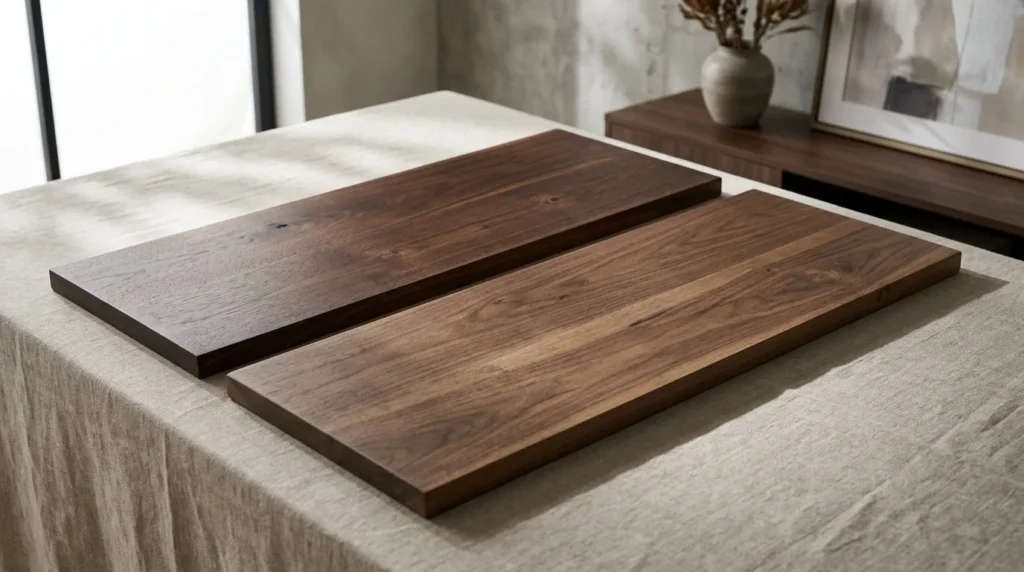
When it comes to woodworking, few materials rival the beauty and versatility of walnut wood. Known for its rich tones and durable nature, walnut has been a favorite among craftsmen for centuries. But within the walnut family, there’s often confusion between general walnut wood and the highly sought-after black walnut. While both offer unique qualities, their differences can significantly impact your project’s outcome.
Black walnut, often called the “King of Hardwoods,” stands out for its deep chocolate hues and fine grain, making it a prized choice for high-end furniture and cabinetry. On the other hand, walnut wood can refer to a broader range of species, each with varying characteristics. Understanding these distinctions is key to choosing the right wood for your needs, whether you’re crafting an heirloom piece or upgrading your home’s interior. Let’s explore what sets these two apart.
Overview Of Walnut Vs Black Walnut Wood
Walnut wood, a broad category, includes several species of the walnut tree. These vary in color, grain, and hardness. Black walnut, however, stands out as the premium choice for woodworking due to its distinct characteristics like a rich dark brown heartwood and fine, tight grain.
Black walnut, identified as Juglans nigra, is a species native to North America. Its density of 630 kg/m³ and Janka hardness of 1,010 lbf make it more durable compared to general walnut species. Its heartwood ranges from dark chocolate brown to light brown, often contrasting with the creamy white sapwood, providing an elegant appearance not seen in common walnut varieties.
In comparison, other walnut woods tend to have lighter, less striking hues and varied grain patterns. This makes them more suitable for practical or lower-budget projects rather than luxurious or heirloom pieces, where black walnut excels. Understanding these key differences simplifies the process of choosing the right type of walnut wood for specific projects.
Key Differences Between Walnut And Black Walnut
Walnut and black walnut differ in appearance, grain pattern, durability, and workability, making each suitable for distinct woodworking needs. These features affect the aesthetic, performance, and cost of the final project.
Appearance And Color
Walnut wood spans hues from light brown to yellow with blonde tones, while black walnut features a rich chocolate heartwood contrasting with creamy white sapwood. Black walnut’s unique dark brown color and natural patina over time give it a premium, upscale allure, unlike the muted tones of standard walnut.
Grain Pattern
Black walnut’s grain is tight, fine, and uniform, lending an elegant look to furniture and high-end cabinetry. Other walnut species tend to have more open or inconsistent grains, creating less refined and more rustic visual effects in finished pieces.
Hardness And Durability
Black walnut boasts a density of 630 kg/m³ and a Janka hardness of 1,010 lbf, ensuring excellent resistance to wear and dents. Regular walnut generally lacks this level of strength, making it less durable for high-traffic areas like flooring or exposed furniture pieces.
Workability
Black walnut’s dense yet manageable texture allows for smooth sawing, sanding, and polishing. Standard walnut, while easier to cut and shape due to its slightly softer texture, often lacks the same high-quality finishing capability, making it less ideal for polished, detailed work.
Common Uses Of Walnut And Black Walnut Wood
Walnut and black walnut wood are valued for their functionality and aesthetics. Their unique properties make them ideal for a wide range of applications.
Furniture And Cabinetry
Walnut wood, especially black walnut, is highly sought after for crafting high-end furniture and cabinetry. Black walnut’s rich chocolate tones and tight grain patterns offer an upscale finish for dining tables, bed frames, and dressers. The durability of black walnut ensures furniture longevity, while lighter walnut species cater to budget-friendly options like simple cabinets or bookshelves. Its workability allows intricate carvings, enhancing visual appeal.
Flooring And Paneling
Both walnut and black walnut are excellent choices for flooring and paneling due to their warm hues and resilience. Black walnut’s hardness of 1,010 lbf on the Janka scale makes it suitable for areas with moderate foot traffic, adding elegance to living rooms or home offices. Lighter walnut wood, with its varied grains, provides a softer yet still durable option for decorative wall paneling or low-traffic flooring.
Decorative Applications
Walnut and black walnut excel in decorative applications like veneers, gunstocks, and small decorative items. Black walnut’s dark tones and smooth finish are found in upscale veneers used for high-end woodwork. Its tight grain and durability also make it a favorite for gunstocks. Walnut species with lighter or mixed tones are ideal for home décor accents, like wooden trays, clocks, or small carvings. These decorative pieces showcase walnut’s versatility in woodcraft.

Pros And Cons Of Walnut Vs Black Walnut Wood
Deciding between walnut and black walnut wood depends on the project’s requirements, as both offer unique advantages and potential drawbacks. Below are the strengths and limitations of each type.
Pros And Cons Of Walnut Wood
Pros
- Availability: Walnut wood is widely accessible due to its inclusion of multiple species like English walnut and butternut.
- Affordability: It’s often more budget-friendly than black walnut, making it suitable for cost-conscious projects.
- Workability: Walnut wood is easy to cut, shape, and carve, lending itself well to intricate designs.
- Lighter Tones: Light brown hues and broader grain patterns allow for a variety of aesthetic preferences.
Cons
- Durability: Compared to black walnut, its Janka hardness and density are lower, making it less resistant to dents and wear.
- Inconsistent Grain: Some walnut species feature open or irregular grains, which may not achieve the polished look of black walnut.
- Fading Colors: With age, lighter walnut wood may lose its luster and darken unevenly under sun exposure.
Pros And Cons Of Black Walnut Wood
Pros
- Superior Appearance: Black walnut features rich dark chocolate tones and fine, tight grains that exude luxury.
- Durability: Its density of 630 kg/m³ and Janka hardness of 1,010 lbf provide excellent resistance to scratches, indentations, and water.
- Polishability: Achieves a smooth, high-end finish, ideal for heirloom-quality furniture.
- Rot Resistance: Black walnut resists decay and moisture, ensuring long-lasting performance.
Cons
- Cost: Black walnut wood is more expensive, often costing $2 to $38 per board foot, depending on availability and source.
- Limited Supply: Due to slower growth rates and selective harvesting, it’s not as commonly found as standard walnut.
- Workability Challenges: Its density and hardness can make it more challenging to shape or carve compared to other walnut species.
Carefully weighing these pros and cons ensures the right choice of wood for both aesthetic appeal and functional durability.
Which Wood Should You Choose?
Consider the project type and desired outcome when selecting between walnut and black walnut. If you’re prioritizing cost or working on a casual project, walnut offers a budget-friendly option with good workability. Its lighter hues and varied grain make it suitable for cabinetry, flooring, or rustic furniture.
Black walnut is ideal for high-end projects requiring a premium look. Its rich chocolate tones, fine grain, and enhanced durability make it perfect for heirloom furniture, luxury paneling, or decorative veneers. Choose black walnut when appearance, polishability, and longevity outweigh the higher costs.
Match the wood’s durability to the intended use. Walnut is adequate for low to moderate wear, while black walnut excels in moderate to heavy-use applications, such as dining tables or custom flooring. Evaluate these factors to ensure the chosen wood meets both aesthetic and functional needs.
Conclusion
Choosing between walnut and black walnut wood ultimately depends on the balance between your project’s budget, aesthetic goals, and functional needs. Both options offer unique advantages, making them versatile choices for various woodworking applications.
Whether you’re drawn to the luxurious appeal of black walnut or the practicality of standard walnut, understanding their differences ensures you make the right decision. With careful consideration, either wood can elevate your craftsmanship and bring your vision to life.
Frequently Asked Questions
What is the main difference between walnut and black walnut wood?
Walnut wood refers to several species with varied hues and grain patterns, while black walnut, or Juglans nigra, is known for its deep chocolate-brown heartwood, uniform grain, and superior durability. Black walnut is a premium option for high-end woodworking projects.
Is black walnut wood more durable than regular walnut?
Yes, black walnut is denser and has a Janka hardness of 1,010 lbf, making it more durable and resistant to wear compared to standard walnut wood.
Why is black walnut considered more expensive than regular walnut?
Black walnut is more expensive due to its limited availability, rich appearance, fine grain, superior durability, and high demand for luxury woodworking projects.
What are common uses of black walnut wood?
Black walnut wood is often used for luxury furniture, cabinetry, veneers, and flooring in high-end applications due to its elegance and durability.
Can I use walnut wood for budget-friendly projects?
Yes, walnut wood is an excellent choice for cost-effective projects. It offers good workability and lighter tones, making it versatile for casual woodworking and home upgrades.
Does black walnut require special finishing techniques?
Black walnut’s dense texture allows for high-quality polishing and finishes, delivering a refined and luxurious look. However, it may require more effort than regular walnut wood.
What are the pros of choosing walnut wood over black walnut?
Walnut wood is more affordable, readily available, and easier to work with. It’s suitable for projects that don’t require the premium look or durability of black walnut.
How can I identify black walnut wood?
Black walnut wood features a rich chocolate-brown heartwood with tight and uniform grains, often accompanied by creamy white sapwood. Its elegant appearance sets it apart from regular walnut.
Is black walnut resistant to rot?
Yes, black walnut has a natural resistance to rot, making it a great choice for furniture and projects requiring longevity in various environments.
Which type of walnut wood is better for high-traffic areas?
Black walnut is better for high-traffic areas due to its superior durability and hardness, ensuring it withstands wear and tear effectively.
-

The Live Edge Dakota Dining Table
From: $4,000.00 -

The Dakota Dining Table
From: $3,200.00 -

The Mckenzie Dining Table
From: $3,200.00 -

The Addison Dining Table
From: $2,800.00 -

The Modern X Dining Table
From: $2,800.00 -

The Frontier Dining Table
From: $2,800.00 -

The Benson Dining Table
From: $4,000.00 -

The Melissa Dining Table
From: $3,200.00
Trusted by Industry Leaders