
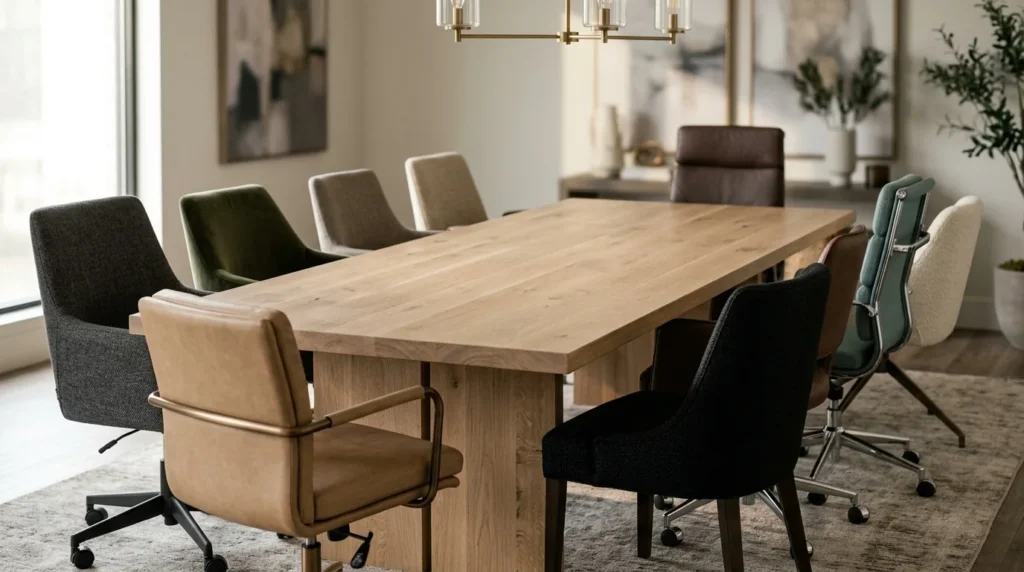
Selecting the right chairs for your conference table is just as crucial as choosing the table itself. I’ve found that the perfect pairing of chairs and conference tables can transform an ordinary meeting space into a powerful business environment that reflects your company’s professional identity. When outfitting conference rooms ranging from intimate 6-8 ft spaces to impressive 14+ ft collaborative areas, chair selection deserves careful consideration.
In my experience working with high-end office furniture, the best conference chair options complement your table’s design while providing comfort for extended meetings. Whether you’re furnishing a Nordic, Larsen, or custom Timberline conference table setup, your chairs should offer the same level of quality craftsmanship as your handcrafted solid wood and steel table. I’ll share how to select chairs that enhance both aesthetics and functionality while supporting your tailored corporate environment.
Understanding Different Types of Conference Chair Styles
When selecting chairs for your conference table, it’s essential to understand the distinct styles available and how each serves different needs in meeting environments. The right chair style can dramatically impact comfort, productivity, and the overall aesthetic of your conference room.
Ergonomic Conference Chairs
Ergonomic conference chairs prioritize comfort and proper body positioning for extended meetings. These chairs typically feature adjustable components like seat height, tilt tension mechanisms, and built-in lumbar support for the lower back. The best ergonomic options include features that cater to various body types, helping participants maintain good posture throughout long discussions. With high-resilience foam cushioning and strategic back support, these chairs encourage productivity by reducing physical discomfort during lengthy meetings. For conference spaces where meetings regularly exceed an hour, investing in ergonomic seating can significantly enhance participant engagement and focus.
Executive Conference Chairs
Executive conference chairs bring a sophisticated look to boardrooms with their refined styling and premium materials. These chairs often feature higher backs, wider seats, and elegant design elements like polished aluminum bases or wood accents. The best executive chairs for conference settings maintain a lower profile height to accommodate various users while providing substantial support. Many models incorporate double-stitch detailing, contoured upholstery, and sweeping armrests that convey status and authority. Executive chairs work exceptionally well in formal meeting environments where making an impression on clients or stakeholders is just as important as providing comfortable seating.
Mesh Back Conference Chairs
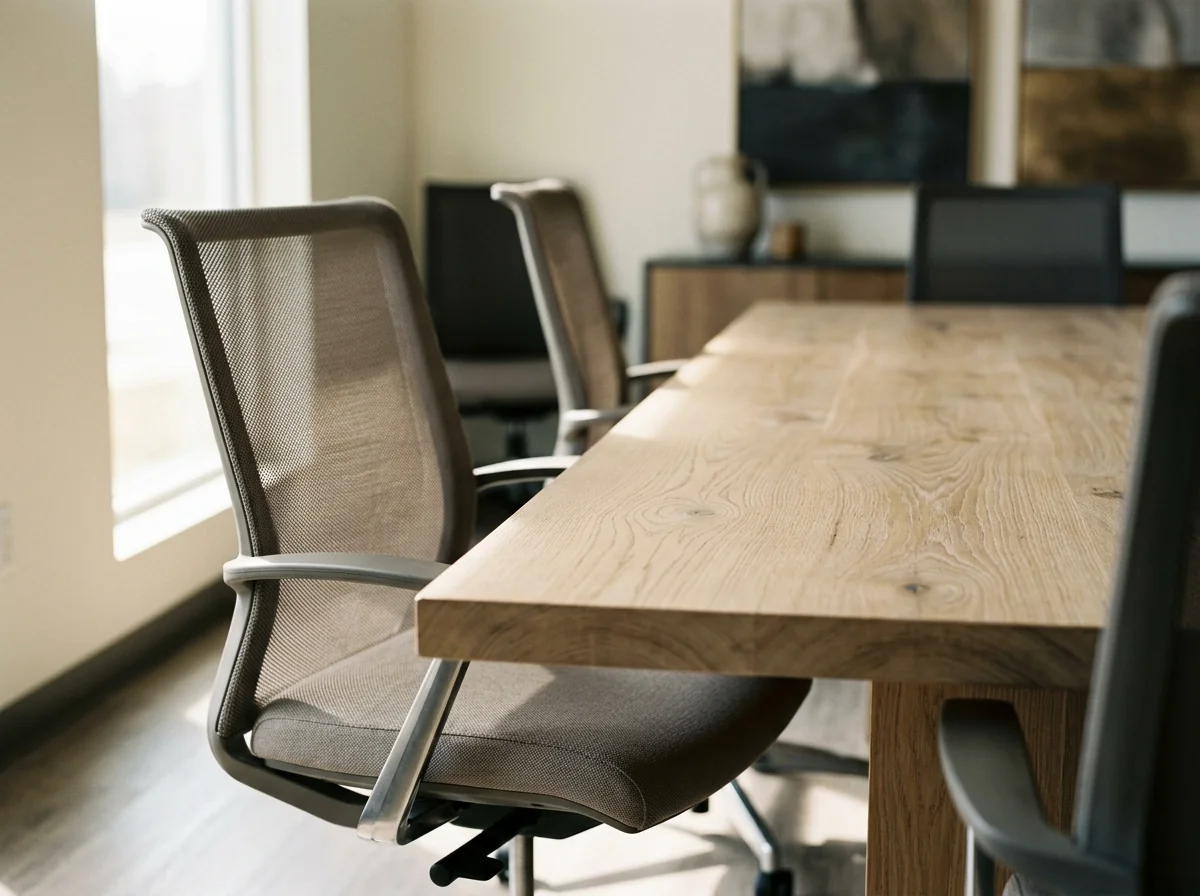
Mesh back conference chairs offer modern styling with practical benefits for contemporary office environments. The breathable mesh material prevents heat buildup during extended meetings while providing flexible support that conforms to the user’s back. These chairs typically feature sleek designs with clean lines that complement modern conference tables. Many mesh models include adjustable components similar to fully ergonomic chairs but with a lighter visual footprint. The combination of comfort and contemporary aesthetics makes mesh back chairs ideal for forward-thinking companies that value both style and functionality in their meeting spaces.
Leather Conference Chairs
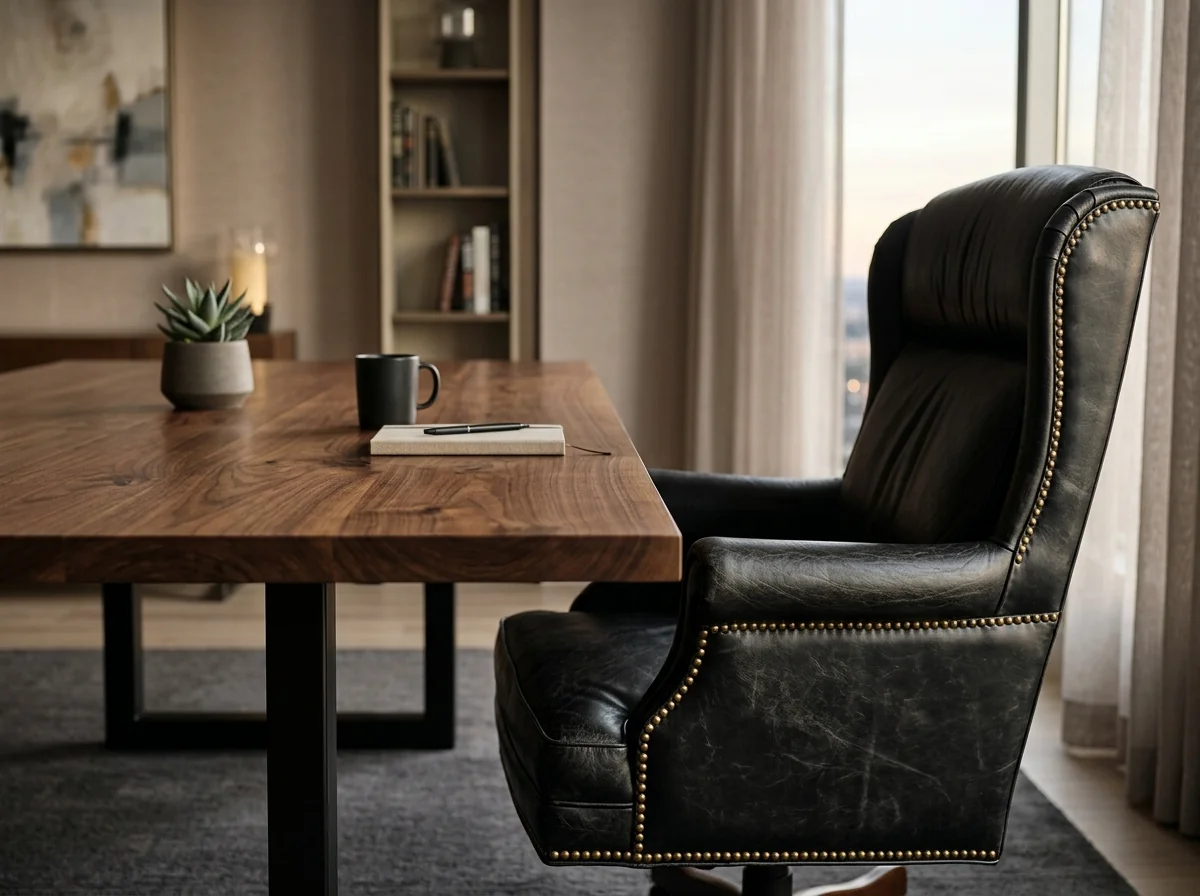
Leather conference chairs deliver a classic, upscale appearance that elevates any boardroom environment. Available in both genuine and faux leather options, these chairs project permanence and professionalism. Premium leather models often feature perforated upholstery panels that enhance comfort by dispersing trapped air, creating a softer, more supportive seating experience. Many leather chairs incorporate detailed stitching and plush cushioning that convey luxury while providing comfort for extended meetings. The timeless appeal of leather makes these chairs particularly well-suited for traditional boardrooms or high-end corporate environments where projecting an established, successful image is paramount to the company’s identity.
Key Features to Consider When Selecting Conference Chairs
After understanding the different chair styles, it’s essential to focus on specific features that will determine comfort, functionality, and longevity of your conference seating investment.
Comfort and Support Options
Comfort is paramount when selecting conference chairs as it directly impacts meeting productivity and participant engagement. Look for chairs with high-resilience foam cushions that provide adequate padding without compressing too quickly over time. Ergonomic support features such as built-in lumbar support for the lower back help maintain proper posture during extended meetings. The backrest design is equally important—options range from curved shapes that follow the natural spine contour to high backrests that provide full upper body support. Consider chairs with contoured seats that distribute weight evenly and reduce pressure points, especially for meetings lasting more than an hour.
Mobility and Adjustability Features
The ability to customize chair positions enhances comfort for diverse users and improves functionality in dynamic meeting environments. Pneumatic seat height adjustment allows users to position themselves appropriately relative to the table height. Tilt tension mechanisms enable users to find their ideal seated position while maintaining proper ergonomic support. For conference rooms that serve multiple purposes, chairs with smooth-rolling casters provide necessary mobility—look for hard casters that perform well on both carpeted and wood floors. Adjustable armrests accommodate different body types and work styles, while swivel capabilities allow participants to turn toward speakers without straining.
Material Durability and Maintenance
The materials used in conference chairs significantly impact their appearance, comfort, and longevity. Upholstery options include polyester fabric for breathability and comfort, faux leather for a sophisticated look with easier maintenance, and genuine leather for premium aesthetics and durability. Mesh backs offer excellent ventilation and contemporary styling while requiring minimal maintenance. Frame construction materials matter too—aluminum bases provide lightweight strength while steel frames offer maximum durability. When evaluating materials, consider your maintenance capabilities and frequency of use; high-traffic conference rooms benefit from stain-resistant fabrics and materials that can be easily cleaned. Quality stitching and construction details like double-stitch detailing indicate chairs built to withstand years of regular use.
Matching Conference Chairs with Table Designs
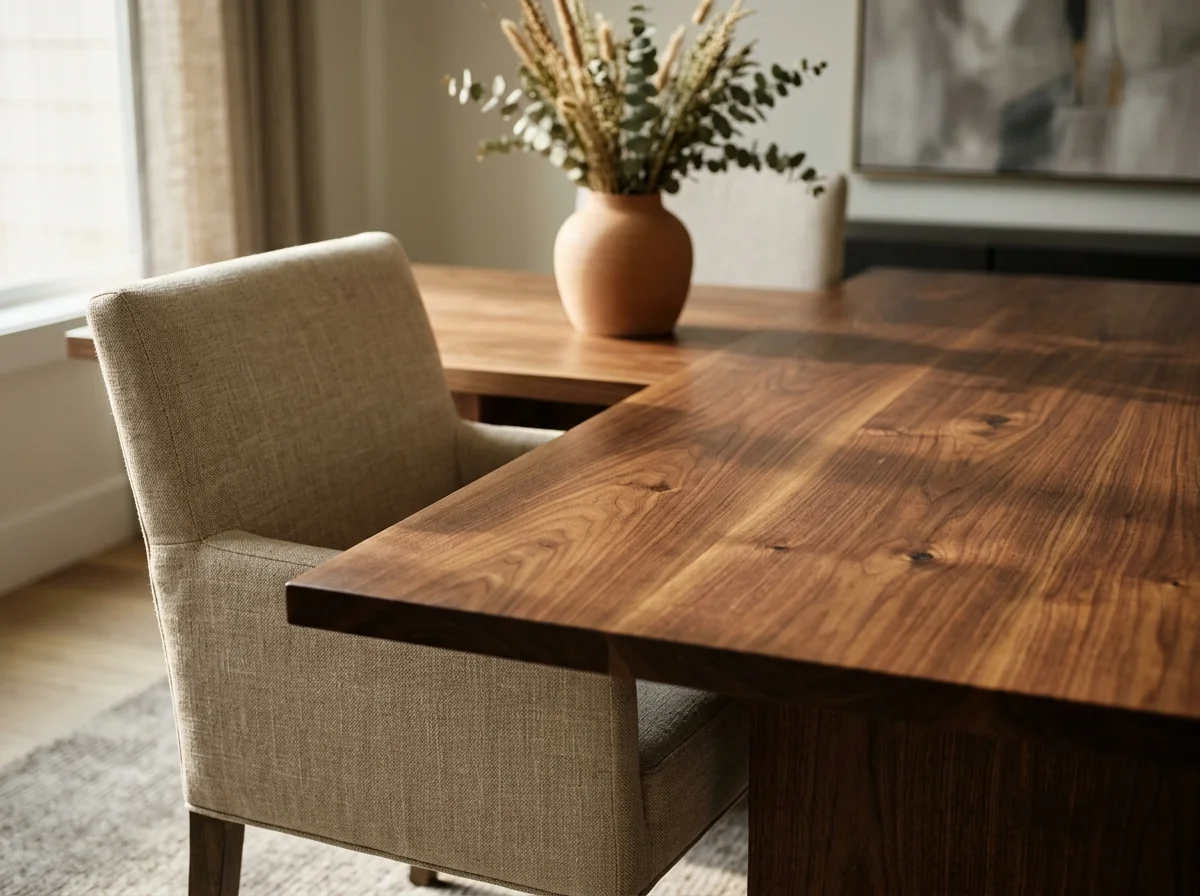
The perfect conference room requires thoughtful pairing of tables and chairs that complement each other both functionally and aesthetically. The shape of your conference table directly impacts which chair styles will work best in your space.
Chairs for Rectangular and Boat-Shaped Tables
Rectangular and boat-shaped conference tables benefit from chairs that maximize seating capacity while maintaining proper spacing. For rectangular tables, opt for chairs with narrower profiles and straight backs that can be pushed flush with the table edge when not in use. The pre-installed threaded insert systems in high-quality tables make it easy to ensure consistent spacing between chairs. Armless or slim-armed chairs work particularly well for the middle sections of rectangular tables where space is often tighter.
Boat-shaped tables, with their wider middle sections, accommodate slightly bulkier chairs at the center positions. This unique table shape is designed to improve visibility during meetings, so pair it with chairs that have adjustable height mechanisms to ensure everyone maintains proper sightlines. Executive-style chairs with a mid-profile height (not too tall to block views across the table) work exceptionally well with the elegant curves of boat-shaped designs. For tables in the 10-12 ft range ideal for mid-sized boardrooms, ensure chairs have sufficient mobility with smooth-rolling casters to facilitate easy movement around the table’s varied perimeter.
Chairs for Round and Modular Tables
Round conference tables create more intimate meeting environments and call for chairs that complement this inclusive design. Chairs with swivel capabilities are ideal for round tables as they allow participants to turn easily toward speakers without repositioning their entire chair. For standard round tables, arrange chairs at equal distances to maintain the table’s symmetry and ensure everyone has comparable personal space.
Modular conference tables require flexible seating solutions that can adapt to changing configurations. Look for lightweight, easily movable chairs that can be quickly rearranged as the table layout changes. Chairs with built-in casters work exceptionally well for these dynamic environments. When pairing chairs with custom-dimension tables, maintain proportional scaling – larger tables (14+ ft designed for collaborative spaces) need chairs with more substantial profiles, while smaller modular setups work best with compact, space-efficient seating. Remember that no matter the table shape, proper ergonomic support remains crucial for productive meetings, so chairs should still feature adjustable settings and comfortable materials that complement the table’s design aesthetic.
Space Planning: How Many Chairs Do You Need?
Determining the right number of chairs for your conference table isn’t just about aesthetics—it’s about functionality and comfort. Proper space planning ensures your meeting room accommodates everyone while maintaining a professional atmosphere.
Spacing Requirements Between Chairs
When planning your conference room seating, adequate spacing between chairs is crucial for comfort and productivity. A good rule of thumb is to allow 24-30 inches of table edge per person, which provides enough elbow room for writing and laptop use. For optimal comfort, I recommend maintaining at least 18 inches between the chair seats when occupied. This prevents the uncomfortable “shoulder-to-shoulder” effect that can distract participants during important meetings.
The relationship between table length and seating capacity follows a simple formula: the length of your table in feet typically equals the number of people it can comfortably seat. For example, a 12-foot table can accommodate approximately 12 people—five on each side and one at each end. This calculation works best for rectangular, oval, and boat-shaped tables, which are the most common conference table designs.
For proper circulation space, ensure there’s at least 36 inches between the edge of the table and any wall or other furniture. This creates a 3-foot perimeter that allows people to pull out chairs and move around the room without disruption. Remember that overcrowding not only creates physical discomfort but can also negatively impact meeting dynamics and productivity.
Size Considerations for Different Room Layouts
The dimensions of your conference room significantly impact your furniture options and seating capacity. In a standard 15′ x 15′ room, allowing for that essential 3-foot perimeter leaves you with a 9′ x 9′ space for your furniture. This space must accommodate not just your table and chairs but potentially other conference room elements like presentation screens, whiteboards, and credenzas.
For rectangular conference rooms, longer tables with more seating capacity work well, but ensure there’s still adequate room for people to navigate around the perimeter. In square rooms, consider round or square tables that maximize the space efficiently. For irregularly shaped rooms, custom-designed tables might be your best option to optimize the available space.
Standard conference tables come in 8′, 10′, and 12′ lengths, but boardroom tables can extend to 20′ or longer for larger teams. When selecting your table size, consider both your current needs and potential future growth. A table that’s too small creates cramped conditions, while one that’s too large can make communication difficult across distances.
If your space serves multiple purposes, consider modular conference tables that can be reconfigured based on different meeting requirements. This flexibility allows you to use the same room for board meetings, training sessions, or collaborative work groups. Pair these tables with lightweight, easily movable chairs that can be rearranged as needed or stored when not in use.
Remember to account for technology integration when planning your space. Tables with built-in power outlets, data ports, and cable management systems require specific positioning in relation to floor outlets and wall connections, which may influence your overall room layout and chair placement.
Budget-Friendly vs. Premium Conference Chair Options
Value Options That Don’t Sacrifice Quality
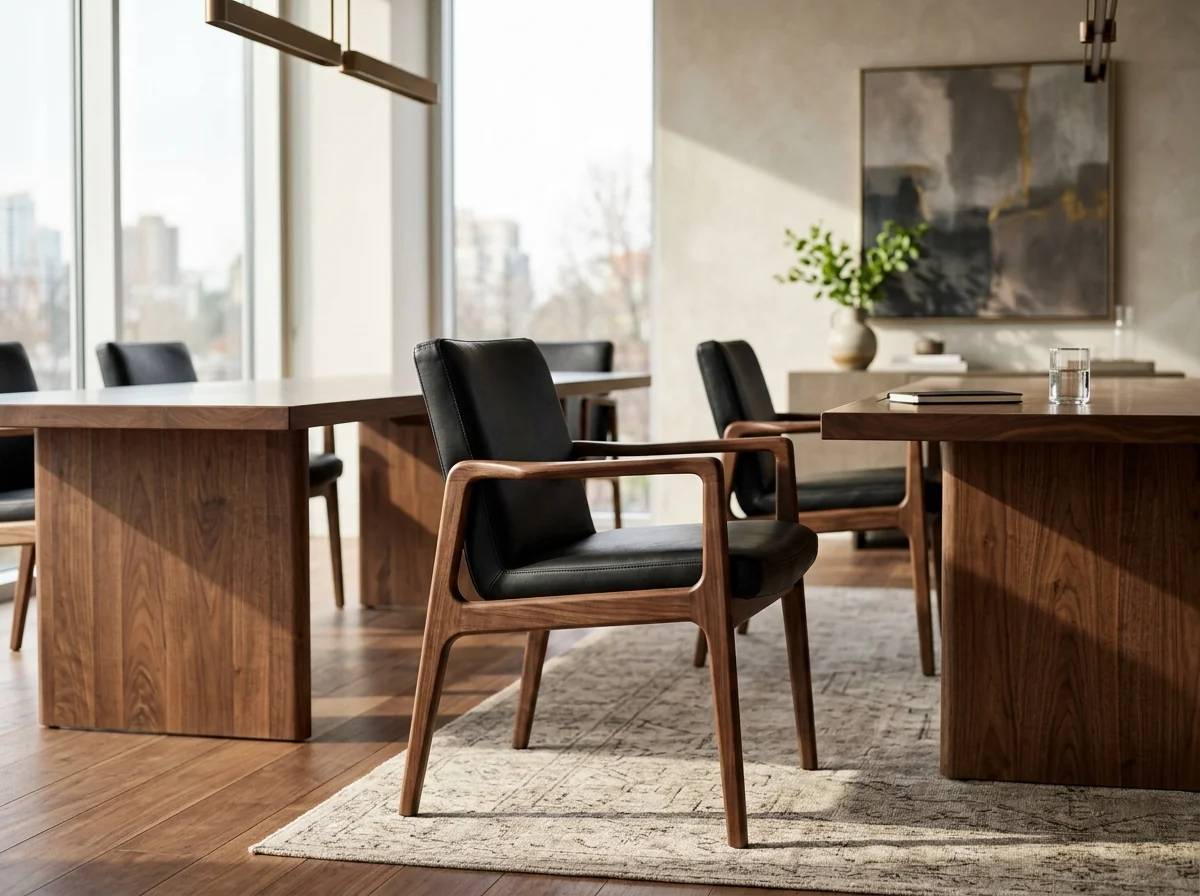
Budget-friendly conference chairs have evolved significantly in recent years, offering impressive features without breaking the bank. Entry-level mesh back chairs with molded arms typically range from $120-$240, providing essential ergonomic support through pneumatic height adjustment and tilt tension mechanisms. Many affordable options now include breathable materials that enhance comfort during extended meetings. Look for chairs with high-density foam cushioning and durable nylon bases, which offer surprising longevity despite their lower price point. Manufacturers have mastered producing cost-effective chairs by streamlining designs while maintaining core functionality, making these value options ideal for growing businesses or spaces that require numerous seating solutions.
| Budget Chair Feature | Typical Price Range | Benefit |
|---|---|---|
| Mesh back with basic ergonomics | $120-$240 | Breathability with essential support |
| Single position tilt lock | $90-$200 | Basic posture adjustment |
| Molded arms | $130-$250 | Support without complex mechanisms |
| Luxhide (faux leather) seats | $230-$350 | Professional appearance at lower cost |
Investment Pieces for Executive Boardrooms
Premium conference chairs represent an investment in both aesthetics and performance that can dramatically elevate a boardroom’s professional atmosphere. High-end options starting at $400-$700 feature superior materials like genuine leather upholstery, hand-polished aluminum components, and precision-engineered mechanisms that provide seamless adjustability. Executive conference chairs often incorporate sophisticated ergonomic features such as synchronized tilt, multi-dimensional armrests, and built-in lumbar support systems that promote proper posture during lengthy meetings. The craftsmanship in premium chairs is evident in their tailored stitching, refined silhouettes, and thoughtful details like waterfall seat edges that reduce leg fatigue. These chairs aren’t merely furniture—they’re statement pieces that communicate company values while providing exceptional comfort for decision-makers during critical discussions.
| Premium Chair Feature | Typical Price Range | Benefit |
|---|---|---|
| Full-grain leather upholstery | $500-$1,200 | Luxurious feel with natural aging properties |
| Multi-function mechanisms | $400-$900 | Customized comfort for diverse users |
| High-back executive styling | $600-$1,100 | Status-appropriate design for leadership |
| Polished aluminum accents | $450-$850 | Refined aesthetic with superior durability |
Specialized Conference Chair Solutions
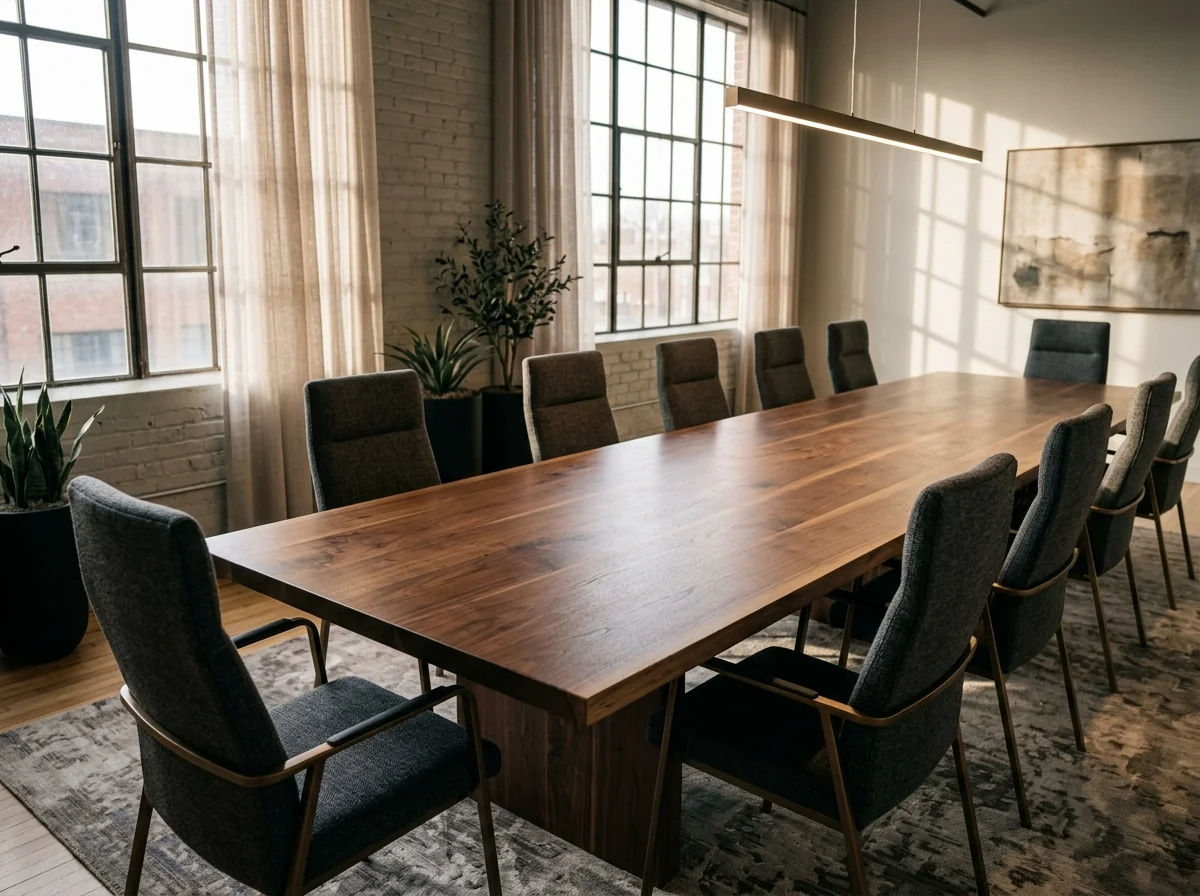
As organizations evolve, so do their needs for diverse meeting environments. Let’s explore specialized chair solutions that address unique conference room requirements.
Chairs for Multi-Purpose Conference Spaces
Multi-purpose conference spaces demand versatile seating options that can adapt quickly to different functions. Stacking chairs provide an excellent space-saving solution for overflow crowds, allowing you to store them efficiently when not in use. These chairs can be easily stacked atop one another, maximizing storage capacity while maintaining readiness for larger gatherings.
Nesting chairs offer similar benefits but with a different design approach. Rather than stacking vertically, these chairs nest together horizontally, taking up minimal floor space when stored. Both options are ideal for training sessions, town halls, or conference rooms that frequently transition between different layouts.
Chairs with tablet arms deliver functionality for attendees who aren’t seated at the main conference table. These provide integrated writing surfaces that support note-taking during presentations or collaborative sessions. Look for tablet-arm chairs with 360-degree swivel capabilities to facilitate better engagement and interaction during meetings.
Chairs with casters offer superior mobility for dynamic meeting environments. Models with roll-and-lock casters allow for easy flexibility while providing stability when needed. For spaces that transform from formal meetings to collaborative sessions, lightweight chairs with modular design elements can be quickly reconfigured to support different work modes.
Accessibility and Inclusive Seating Options
Creating inclusive conference spaces starts with providing seating options that accommodate all users. Big and tall chairs support attendees who are taller or heavier than average, featuring reinforced frames, wider seats, and higher weight capacities—typically supporting 300-400 pounds. Including several of these in your seating inventory ensures comfort for all participants.
Petite chairs serve smaller attendees with proportionally designed dimensions that allow proper ergonomic positioning. These chairs feature lower seat heights, shallower seat depths, and appropriately positioned armrests to promote proper posture for smaller-framed individuals.
Wheelchair-accessible table configurations require thoughtful planning. Conference tables with adequate clearance (at least 30 inches wide and 27 inches high) accommodate wheelchair users comfortably. Removable chairs at designated positions allow wheelchair users to join the table without awkward positioning or special attention.
Height-adjustable chairs benefit users with mobility challenges, allowing them to customize their position relative to the table. Look for pneumatic seat height adjustment mechanisms that offer effortless customization with ranges between 16-21 inches from the floor. For multi-day meetings or conferences, chairs with high-resilience foam cushions and built-in lumbar support help prevent discomfort and fatigue for all participants, particularly those with back sensitivity or chronic pain conditions.
Conclusion: Making the Final Decision on Conference Chairs
Selecting the perfect chairs for your conference table requires balancing aesthetics comfort functionality and budget. The right chairs won’t just complement your table—they’ll elevate your entire meeting space and enhance productivity.
Remember that your conference chairs represent your company’s commitment to both employees and clients. Whether you opt for ergonomic mesh chairs premium leather seating or versatile multi-purpose options prioritize chairs that support comfortable extended meetings while matching your table’s design aesthetic.
I’ve seen firsthand how thoughtful chair selection transforms conference rooms from merely functional to truly exceptional. By considering table shape space requirements inclusive design and quality construction you’ll create a meeting environment where ideas flow and collaboration thrives.
Trusted by Industry Leaders