
Picking the right dining table size can feel like a puzzle. Too big, and your space feels cramped. Too small, and it looks out of place. This guide will walk you through everything you need to know about dining table sizing, so you can find the perfect fit for your home.
Key Takeaways
- Measure your dining area carefully before choosing a table.
- Consider how table shape impacts space and seating.
- Leave enough room for chairs to be pulled out comfortably.
- Think about your regular seating needs and occasional guests.
- Test layouts with tape or cutouts before buying.
Understanding Dining Table Dimensions
Key Measurements to Consider
When you’re figuring out the ideal dining table dimensions, start by looking at your space. Here’s a simple way to do it:
- Measure the length and width of your dining area.
- Subtract 6 feet from both dimensions to leave 3 feet of clearance on each side for chairs and walkways.
- Multiply the remaining numbers by 12 to convert to inches—this gives you a good starting point for your table size.
For example:
- A 9′ x 10′ room works well with a 36" x 48" table.
- A 10′ x 10′ room can handle a 48" x 48" square table or a 36" x 60" rectangular one.
Pro Tip: Always allow at least 3 feet of space around the table for comfort and mobility.
How Table Shape Affects Sizing
The dining table shape and size you choose can drastically change how it fits your room. Here’s a quick comparison:
| Shape | Best For | Notes |
|---|---|---|
| Rectangular | Long, narrow rooms | Seats more people but needs more room |
| Round | Small, cozy spaces | Great for conversations, space-saving |
| Square | Square-shaped rooms | Balanced look, ideal for 4-6 people |
| Oval | Flexible arrangements | Combines round and rectangular perks |
If you’re unsure how to choose dining table size based on shape, think about how you plan to use it. For family dinners, rectangular or oval might be best. For tight spaces, round tables are lifesavers.
Common Mistakes to Avoid
Avoid these pitfalls when picking a dining table:
- Skipping the clearance check: Without enough space, pulling out chairs becomes a hassle.
- Ignoring table leg placement: Central legs on round tables can limit seating options.
- Choosing overly large tables: Bigger isn’t always better—it can overwhelm the room.
Take your time to measure and visualize. A well-sized table balances practicality and style, making your dining area inviting and functional.
Choosing the Right Table for Your Space
Assessing Room Dimensions
Before diving into the world of dining tables, take a moment to measure your dining area. Grab a tape measure and jot down the length and width of the space. A good rule of thumb is to leave at least 30 to 36 inches of clearance around the table so people can move comfortably. If your room is oddly shaped or has other furniture, consider how the table will fit alongside those elements. For smaller rooms, a round or square table might work better, while larger spaces can accommodate rectangular or oval options.
Balancing Clearance and Comfort
When selecting a table, think about how much space you’ll need for chairs and movement. Here’s a quick guide to help:
| Table Shape | Ideal Clearance (per side) |
|---|---|
| Round | 30-36 inches |
| Rectangular | 36 inches |
| Square | 30 inches |
| Oval | 36 inches |
Make sure to account for the size of the chairs, too. If they’re bulky or have arms, they’ll need more room. And don’t forget about table legs—some designs eat up more space than others, which can impact seating comfort.
Adapting to Open-Plan Layouts
Open-plan spaces can be tricky because there’s no defined "dining room." Use rugs or lighting to visually anchor your table. A pendant light above the table can create a cozy dining zone even in a wide-open area. Keep in mind that the table shouldn’t feel isolated—position it near other furniture or features like a kitchen island to maintain flow. If you’re dealing with limited space, consider extendable tables that can shrink or expand based on your needs.
Remember, the right table doesn’t just fit your space—it complements how you live. Whether it’s for everyday dinners or hosting friends, your table should feel like it belongs.
Seating Capacity and Table Size
Standard Seating Guidelines
When choosing a dining table, knowing how many people it can seat comfortably is a must. A general rule is to allocate 24 inches of width per person for a relaxed dining experience. Here’s a quick size guide to help:
| Seating Capacity | Minimum Table Dimensions |
|---|---|
| 2 Seater | 24" x 28" |
| 4 Seater | 48" x 28" |
| 6 Seater | 72" x 32" |
| 8 Seater | 96" x 36" |
| 10 Seater | 120" x 36" |
For round tables, a 48-inch diameter works for four people, while a 60-inch diameter can seat six comfortably.
Accommodating Larger Gatherings
If you love hosting, consider tables with extensions or leaves. These can transform a cozy table for everyday use into a spacious one for special occasions. Some tables even offer drop-leaf designs, saving space when not in use. Think about how often you host and plan accordingly.
Optimizing for Small Families
For smaller households, a compact table might be all you need. Round tables are a great option for tight spaces, as they allow for flexible seating arrangements. Consider a pedestal base to maximize legroom. And if your space is really limited, wall-mounted drop-leaf tables can be a lifesaver.
Remember, the right table size isn’t just about fitting people—it’s about creating an inviting space where everyone feels comfortable.
Customizing Your Dining Table
Exploring Material Options
When it comes to dining tables, the material you choose plays a big role in both style and durability. Solid wood, like oak or walnut, is a classic choice, offering a timeless look and long-lasting quality. For a modern vibe, consider glass or metal, though they may require more maintenance. If sustainability matters to you, reclaimed wood is a fantastic option—it’s eco-friendly and adds character to your space. Whatever you pick, think about how it’ll hold up to daily use and match your decor.
Tailoring Table Height and Width
Standard dining tables are typically 28 to 30 inches tall, but why not make it your own? For taller individuals or a unique aesthetic, you could go slightly higher. Width is another factor—rectangular tables usually range from 36 to 42 inches wide, but smaller spaces might benefit from a narrower design. The key is ensuring everyone has enough elbow room and can comfortably reach the center. Consider testing dimensions with painter’s tape on the floor before committing.
Incorporating Unique Design Features
A custom table is your chance to get creative. Add extendable leaves for flexibility when guests come over. Opt for a live edge for a rustic, natural look, or choose intricate legs for a more artistic flair. You can even incorporate storage solutions, like built-in drawers or shelves, to make the table more functional. Think about how these features will enhance both the table’s practicality and its role as a centerpiece in your home.
Customizing your dining table isn’t just about picking a style—it’s about creating a piece that fits your life perfectly. From the materials to the dimensions and special features, every detail should reflect your personal taste and needs.
| Feature | Options | Benefits |
|---|---|---|
| Material | Wood, Glass, Metal, Reclaimed Wood | Durability, Style, Eco-Friendliness |
| Height | Standard (28-30 in.), Custom Heights | Comfort, Aesthetic Appeal |
| Design Features | Extendable Leaves, Live Edge, Storage | Flexibility, Unique Look, Functionality |
For those interested in a custom wood dining table, this process ensures you end up with a piece that’s both functional and one-of-a-kind.
Practical Tips for Table Placement
Maintaining Walkways and Accessibility
When it comes to placing your dining table, walkway space is key. Make sure there’s at least three feet of clearance on all sides of the table. This ensures guests can push their chairs out comfortably and move around without bumping into furniture. If your dining area is part of an open-plan space, avoid leaving more than six feet of empty space on any one side, as it can make the table feel out of place.
Aligning with Lighting and Decor
Your table placement should complement the room’s lighting and overall design. Centering the table under a chandelier or pendant light not only looks great but also ensures even lighting during meals. Match the table’s style with the room’s decor—whether it’s rustic, modern, or something in between—to create a cohesive look.
Testing Layouts Before Purchase
Before committing to a table, mock up its size using masking tape or cardboard. This trick helps you visualize how the table will fit in your dining space. You can even use books or newspapers to mimic its height and mass. Ask yourself:
- Is there enough room for doorways and drawers to open?
- Can chairs be pushed out easily?
- Is the walkway clear for everyone?
Planning your table placement ahead of time saves you from future headaches and ensures a dining area that’s both functional and inviting.
For more tips on creating a polished dining experience, check out these dining space planning tips.
The Role of Aesthetics in Table Sizing
Matching Table Style to Room Design
When it comes to choosing a dining table, style isn’t just about looks—it’s about how the table fits into the overall vibe of your space. A sleek, modern table with clean lines might look out of place in a room full of rustic decor. Meanwhile, a farmhouse-style table with a distressed finish could feel overwhelming in a minimalist setting. Your dining table should feel like it belongs, blending seamlessly with your chairs, lighting, and even the flooring. Think about the big picture: does the table’s design echo the room’s theme?
Blending Functionality with Elegance
Aesthetic choices shouldn’t sacrifice usability. For instance, a glass table may look stunning, but it might not be the best choice if you have young kids running around. On the other hand, a chunky wooden table can bring warmth and durability, but it might dominate a small room. Striking a balance between practicality and beauty is key. Ask yourself: does this table enhance the room’s charm without making it feel cramped or impractical?
Choosing Finishes That Enhance Space
The finish of your dining table can dramatically affect how it feels in your space. Lighter finishes tend to make smaller rooms feel more open, while darker stains can add a cozy, intimate vibe to larger spaces. Matte finishes are excellent for a contemporary look, while glossy surfaces can add a touch of luxury. If your dining area has plenty of natural light, a rich wood grain might shine beautifully. But in dimmer spaces, a lighter finish could help brighten things up.
A well-chosen dining table doesn’t just fill a space—it transforms it, becoming a centerpiece that draws people in while complementing the room’s overall design.
Sustainability and Dining Table Choices
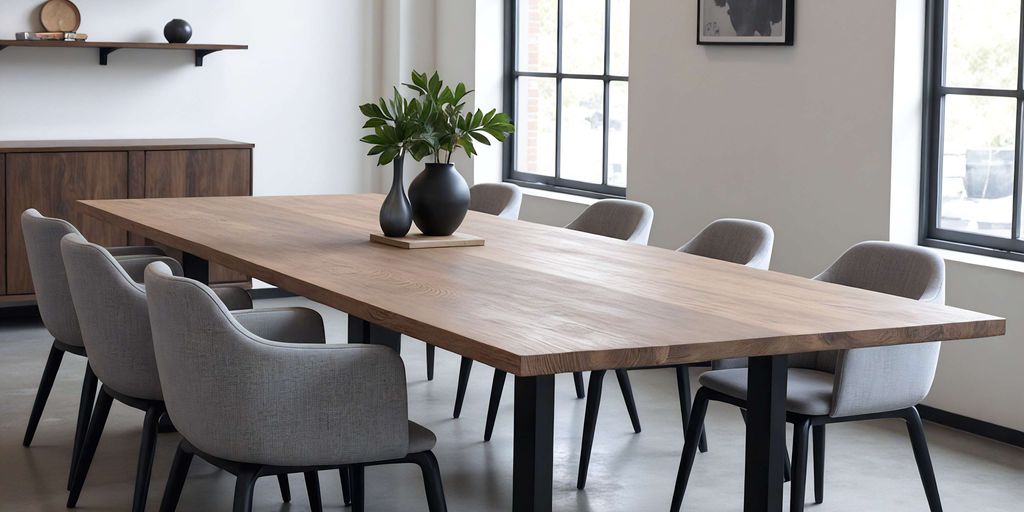
Opting for Eco-Friendly Materials
When picking a dining table, the materials used are a big deal. Solid hardwoods like oak, ash, and walnut are durable and timeless, but not all wood sources are created equal. Look for tables made from sustainably harvested wood, which ensures forests are managed responsibly. Bamboo is another excellent choice—it grows fast and has a minimal environmental footprint. If you’re into something more unique, reclaimed wood gives old materials a second life while adding character to your space.
Supporting Local Craftsmanship
Buying locally made furniture doesn’t just support artisans—it also cuts down on the carbon footprint associated with shipping. Plus, local makers often use regional materials, which means you’re getting something that’s not only handcrafted but also rooted in the area’s heritage. Ask about where the wood comes from and how it’s treated. Supporting smaller workshops can also mean getting a more personalized piece that reflects your style.
Balancing Longevity with Style
A sustainable table isn’t just about the materials—it’s also about how long it lasts. A well-built table can stick around for decades, even generations. That’s why it’s worth investing in quality craftsmanship and classic designs that won’t feel outdated in a few years. Think about finishes, too: natural oils and water-based stains are more eco-friendly than chemical-heavy options. And if you ever want to refresh the look, a solid wood table can be sanded and re-stained, giving it a whole new life.
Making sustainable choices when buying a dining table isn’t just about being eco-friendly—it’s about creating a space that feels meaningful and intentional. A table is more than furniture; it’s where memories are made.
Conclusion
Picking the right dining table size doesn’t have to be a headache. It’s all about finding that sweet spot where your space, seating needs, and style come together. Take some time to measure, visualize, and think about how you’ll use the table day-to-day. Whether it’s for family dinners, game nights, or just a spot to sip your morning coffee, the right table can make all the difference. So, grab that tape measure, trust your gut, and go for it. Your perfect dining table is out there waiting.
Frequently Asked Questions
How do I pick the right size dining table for my room?
Measure your room and leave at least 3 feet of space around the table for easy movement. Consider the table’s shape and how it fits your space.
What is the best material for a dining table?
Solid hardwoods like oak or walnut are durable and stylish. You can also consider materials like glass or metal for a modern look.
How many people can a standard dining table seat?
A typical rectangular table seats 4 to 6 people, while larger ones can accommodate 8 to 10. Round tables usually seat 4 to 8, depending on their size.
What’s the ideal height for a dining table?
Most dining tables are about 28 to 30 inches tall, which works well with standard dining chairs.
Can I customize my dining table?
Yes, many manufacturers offer customization options for size, material, and design to fit your specific needs.
How do I ensure my dining table matches the room decor?
Choose a table that complements your room’s style, color scheme, and furniture. Consider finishes and shapes that blend well with your overall design.